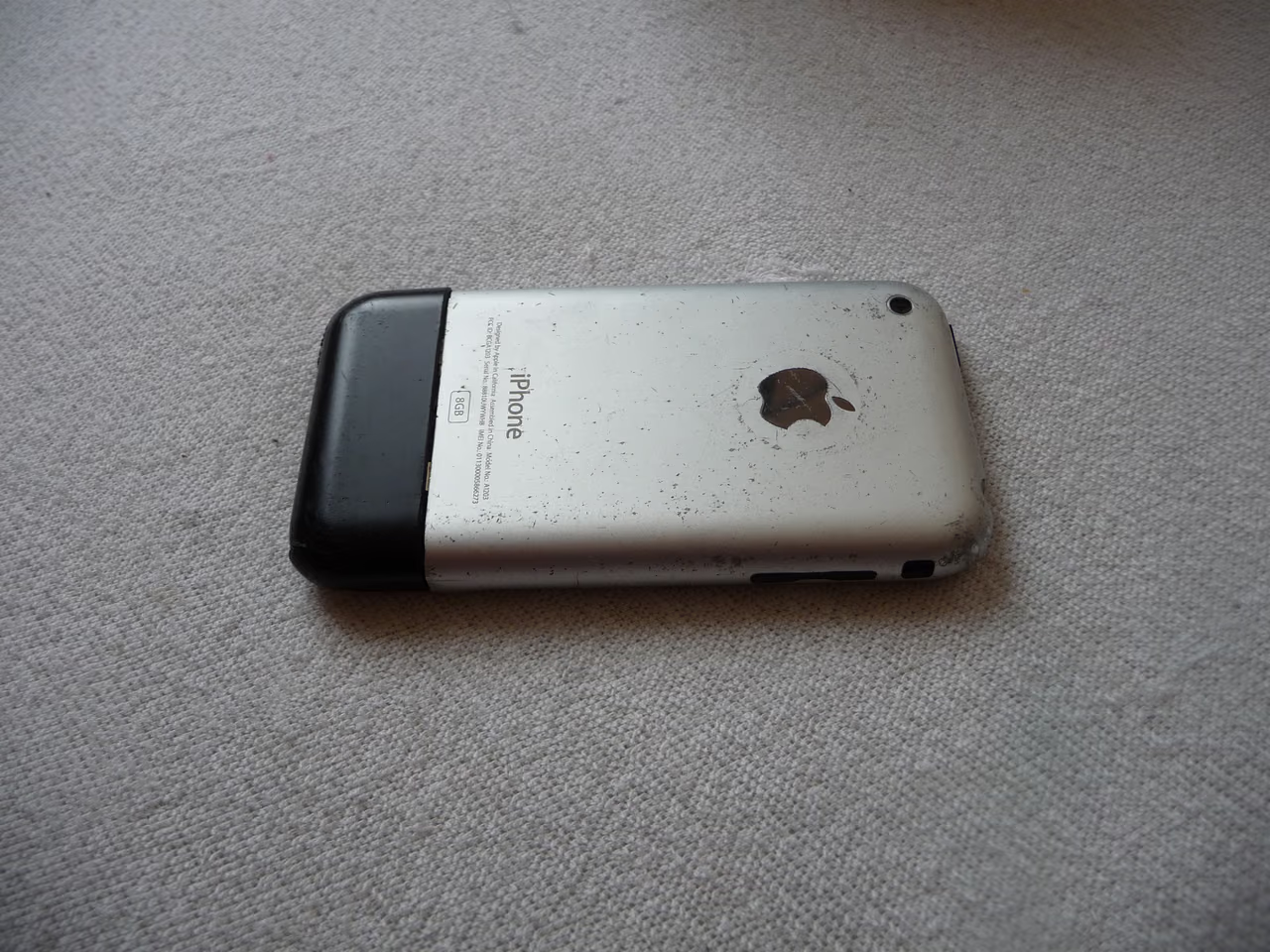
About this machine

The first telephone in this catalog is also the first record where the number on the box does not describe the machine's working memory. Apple sold the iPhone as a 4 GB model and an 8 GB model. Both figures are flash storage. The memory used to run programs is 128 MiB, which Apple never mentioned; it appears here because somebody took the phone apart and wrote it down.

Apple's two press releases give a price, a capacity, a screen size and a camera, but no processor, frequency or memory. The clock, the core, the graphics part and the memory all come from one independent analysis published two years later. Because it is one analysis rather than two, every figure it supports is provisional. The catalog's rule is a tier A source or two agreeing tier B ones; the vendor's silence does not lower the bar.

The analysis does not guess. It gives the processor as 412 MHz and says plainly that it does not know the graphics core's frequency. That sentence is the evidence for the graphics clock, and it is the reason there is no figure to give.

Configuration

4 GB model

Component Role Count Clock Capacity
Apple iPhone system-on-chip (CPU section) One ARM1176JZF-S core. Apple states no frequency; this one is independently published. Main CPU 1 412 MHz Nominal clock
PowerVR MBX Lite (iPhone) On the same package as the processor. No frequency has been published for it by anyone. GPU 1 unknown Nominal clock
Apple iPhone system-on-chip memory One pool on the package, shared by the processor and the graphics core. System memory 1 128 MiB shared
Apple iPhone flash storage Where programs are kept. Thirty-two times the memory the machine runs them in. Storage 1 4 GB

8 GB model

Component Role Count Clock Capacity
Apple iPhone system-on-chip (CPU section) One ARM1176JZF-S core. Apple states no frequency; this one is independently published. Main CPU 1 412 MHz Nominal clock
PowerVR MBX Lite (iPhone) On the same package as the processor. No frequency has been published for it by anyone. GPU 1 unknown Nominal clock
Apple iPhone system-on-chip memory One pool on the package, shared by the processor and the graphics core. System memory 1 128 MiB shared
Apple iPhone flash storage Where programs are kept. Sixty-four times the memory the machine runs them in. Storage 1 8 GB

Figures for the whole machine

Apple iPhone (1st generation): system figures

provisional A figure marked provisional is recorded but not accepted: its evidence is unsettled. It may rely on one source, an unconfirmed announcement, or a digit read from a damaged scan. The reason appears under the figure. The catalog shows the figure but never uses it in a multiplier. How records are judged.

Metric Value Evidence Basis Method Source
Clock frequency cpu provisional 412 MHz Reported Vendor-rated Nominal clock Published independently The single ARM1176JZF-S core of the shipped phone, deliberately set below the core's capability to save power. Provisional on the sourcing, not on the number. Apple published no frequency for this machine and one independent analysis establishes it; the policy asks for a tier A source or two agreeing tier B ones, so this waits for a second, and meanwhile feeds no multiplier. The same paragraph says the core is capable of 667 MHz, which is a different quantity and is not recorded: what the part is able to do is not what it was set to do.
Storage capacity storage 4 GB Confirmed Vendor-rated Design capacity Stated by the vendor The smaller of the two models sold at launch, $499 in the United States. Storage, not memory. Apple wrote "4GB" and it is read decimally, as makers state flash and disk capacities. This catalog reads a memory part as binary instead. The two quantities are kept in separate metrics precisely because this machine is where they are most often confused: the number on the box is this one, and it is thirty-two times the memory the phone actually runs in.
Storage capacity storage 8 GB Confirmed Vendor-rated Design capacity Stated by the vendor The larger of the two models sold at launch, $599 in the United States. The larger of the two launch models, read decimally for the same reason as the smaller one. Both releases state the same pair of capacities, five months apart; the later one is cited first because it describes hardware that was already in the shops.
Launch price whole-system 499 USD Confirmed Vendor-rated List price Stated by the vendor United States list price of the 4 GB model, as announced in January 2007 and restated at the retail launch in June. The price of the handset alone. Apple sold it only with a two-year AT&T contract in the United States, and the release states nothing about what that cost, so this is what the hardware was listed at, not what owning it came to.
Launch price whole-system 599 USD Confirmed Vendor-rated List price Stated by the vendor United States list price of the 8 GB model, as announced in January 2007 and restated at the retail launch in June. A hundred dollars for four more gigabytes of flash, which is the only difference the two releases name between the models. As with the 4 GB model this is the handset’s list price and excludes the contract Apple required with it.
4 documented absences
Apple iPhone (1st generation): system figures: documented absences
Metric Value Evidence Basis Method Source
Peak FP32 rate cpu unknown The cited analysis states that the ARM11 CPU in the iPhone has a vector floating point unit, and states no rate for it. Apple states nothing at all. Not stated Vendor-rated Theoretical peak Stated by the vendor Unknown rather than not-applicable: the ARM11 core in this phone has a vector floating-point unit, so the quantity exists. What does not exist is a published rate for it. This is a machine sold to be a telephone, and nobody asked it how many floating-point operations it could do.
Clock frequency gpu unknown Apple states no frequency for any part of this machine. The independent analysis that established the processor clock says outright that it has no clock-speed information for the graphics core and is guessing. Not stated Vendor-rated Nominal clock Stated by the vendor Nobody has published this figure: not the vendor, and not the analysis that established the processor's. The analyst writes that he does not have it and guesses at 60 MHz; a guess is quoted here as evidence that the absence is real, and never recorded as the number.
Memory bandwidth whole-system unknown No source consulted states a memory bandwidth, a bus width or a memory clock for this machine. The one analysis that opens the package describes the memory as 128 MB of DDR on the same die and stops there. Not stated Vendor-rated Theoretical peak Stated by the vendor Recorded as unknown rather than left out, so the machine appears in the bandwidth row with a stated absence instead of a blank. The teardown-grade sources that give this phone its clock and its capacity do not reach the memory interface, and Apple published nothing.
Rated power consumption whole-system unknown Neither cited release states a power figure of any kind for the phone or its charger. Not stated Vendor-rated Rated power Stated by the vendor Apple publishes battery life for this machine — talk time, standby time, playback time — and battery life is not power. A duration under unstated conditions cannot be turned into watts without the cell's capacity, which Apple also does not publish, so the figure is recorded as unknown rather than computed from something it is not.

Figures for its components

Apple iPhone system-on-chip memory

provisional A figure marked provisional is recorded but not accepted: its evidence is unsettled. It may rely on one source, an unconfirmed announcement, or a digit read from a damaged scan. The reason appears under the figure. The catalog shows the figure but never uses it in a multiplier. How records are judged.

Metric Value Evidence Basis Method Source
Memory capacity whole-system provisional 128 MiB Reported Vendor-rated Design capacity Published independently One pool of DDR memory on the same package as the processor and the graphics core. The memory the machine runs in, and not the number it was sold by: the 4 GB and 8 GB on the box are flash storage, recorded separately and thirty-two to sixty-four times larger. Written "128MB" by the source and read as 128 MiB, the binary convention this catalog applies to every memory capacity. Recorded at whole-system scope because one pool on the package serves the processor and the graphics core alike, so there is no second figure this excludes. Provisional because one independent analysis supports it and no vendor document mentions memory at all.

Derived figures and comparisons

Computed by this project rather than read from a source, and recomputed from their inputs on every build.

800 USD

Formula
nominal price × target CPI-U ÷ launch CPI-U price-adjusted-by-cpi v1
Inputs
  • apple-iphone-1st-generation Launch price: 499 USD
Constants
  • CPI-U for July 2026: 333.918 The target month in the frozen CPI-U snapshot.
  • CPI-U for June 2007: 208.352 The month the iPhone went on sale in the United States.
Rounding
half-up , 3 significant digits

Multiplies the nominal U.S. list price by CPI-U for July 2026 and divides by CPI-U for June 2007. The original price remains the cited launch figure. CPI-U adjusts for U.S. consumer prices; it does not convert currencies or markets. Reported to 3 significant digits, the precision of the nominal price.

960 USD

Formula
nominal price × target CPI-U ÷ launch CPI-U price-adjusted-by-cpi v1
Inputs
  • apple-iphone-1st-generation Launch price: 599 USD
Constants
  • CPI-U for July 2026: 333.918 The target month in the frozen CPI-U snapshot.
  • CPI-U for June 2007: 208.352 The month the iPhone went on sale in the United States.
Rounding
half-up , 3 significant digits

Multiplies the nominal U.S. list price by CPI-U for July 2026 and divides by CPI-U for June 2007. The original price remains the cited launch figure. CPI-U adjusts for U.S. consumer prices; it does not convert currencies or markets. Reported to 3 significant digits, the precision of the nominal price.

Editorial notes

The release date and the hour come from Apple's retail-availability release of 28 June 2007. The 16 GB model added in February 2008 is not recorded: it is a later configuration of the same machine and adds no quantity this record does not already carry. The battery figures Apple publishes, talk time and standby time, are durations under unstated conditions rather than a power draw, so no power figure is recorded for the machine.

Sources

Back to top