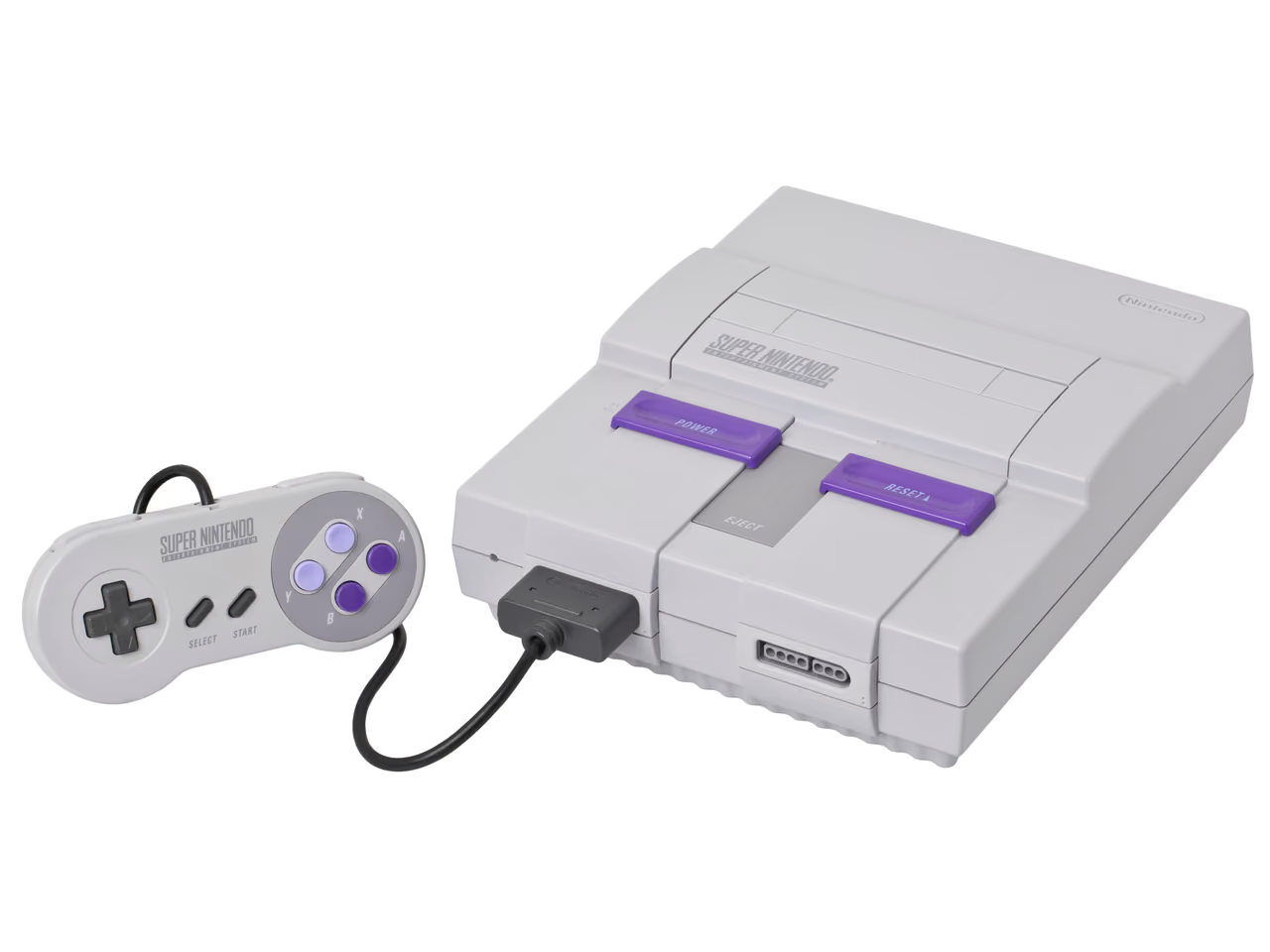
About this machine

This entry is the North American Super Nintendo retail configuration. Its paired picture processors and region-specific timing make it a useful point of comparison within Nintendo's home-console line.

Configuration

NTSC retail console

North America

Component Role Count Clock Capacity
Ricoh 5A22 Nintendo publishes this rate without naming a memory region; the processor also runs a cycle at about 3.58 MHz on fast regions and about 1.79 MHz on the slowest. Main CPU 1 2.68 MHz Nominal clock
Super Nintendo PPU pair Two PPUs work together; their count is not a combined clock. GPU 2 unknown Nominal clock
Super Nintendo work RAM System memory 1 128 KiB
Super Nintendo video RAM Attached to the picture processors. Video memory 1 64 KiB

Figures for the whole machine

Super Nintendo Entertainment System: system figures
Metric Value Evidence Basis Method Source
Clock frequency cpu 2.68 MHz Confirmed Vendor-rated Nominal clock Stated by the vendor As stated by Nintendo, without naming the memory region the rate applies to. One of three rates this processor runs at. The 65816 takes a memory cycle at about 3.58, 2.68 or 1.79 MHz depending on which region it is addressing, so a single number describes the machine only once a region is named, and Nintendo names none. This is the middle rate, which is what the manufacturer chose to publish.
Memory capacity whole-system 196 608 B Confirmed Derived Design capacity Computed here from figures the vendor stated Adds 2 memory-capacity figures obtained by design-capacity. Left out: removable game-cartridge ROM (removable program storage, not memory the console can write to). A total is only as trustworthy as the decision about what belongs in it, so both the terms and the exclusions are named records.
4 documented absences
Super Nintendo Entertainment System: system figures: documented absences
Metric Value Evidence Basis Method Source
Clock frequency gpu unknown Nintendo's table has a Graphics Processor row and puts only "16-bit" in it — a data width, not a frequency. Not stated Vendor-rated Nominal clock Stated by the vendor Unknown rather than not-applicable: the picture processors are clocked, and the vendor names their width instead of their rate.
Memory bandwidth memory unknown Nintendo's table states memory capacities in bits and no transfer rate, bus width or timing. Not stated Vendor-rated Theoretical peak Stated by the vendor The vendor page is a consumer specification rather than a hardware manual; capacities and a cartridge range are as far as it goes into memory.
Storage capacity storage not applicable Nintendo's specification table gives "Cart size: 2 Mbit - 48 Mbit", which is the range the format spanned and not the capacity of a cartridge. Not stated Vendor-rated Design capacity Stated by the vendor Nintendo states a range across the format's whole life rather than a capacity, so the question stays open while the bounds are on the record. It is the only vendor statement this catalog has about cartridge size on any machine.
Rated power consumption whole-system unknown Nintendo's table states dimensions, video and audio outputs and no electrical figure of any kind. Not stated Vendor-rated Rated power Stated by the vendor The console predates the European ecodesign disclosures that give this catalog the Switch's rating, and its specification page states nothing electrical.

Figures for its components

1 documented absence
Ricoh 5A22: documented absences
Metric Value Evidence Basis Method Source
Peak FP32 rate cpu not applicable This console CPU has no integrated floating-point execution unit. Not stated Vendor-rated Theoretical peak Stated by the vendor Not-applicable rather than unknown: this is a fact about the architecture, not about what Nintendo published.
1 documented absence
Super Nintendo PPU pair: documented absences
Metric Value Evidence Basis Method Source
Peak FP32 rate gpu not applicable This is a tile, sprite or scanline graphics unit, not a floating-point processor; it executes no FP32 operations. Not stated Vendor-rated Theoretical peak Stated by the vendor Not-applicable for the same architectural reason as the processor, and recorded separately because these are separate parts.
Super Nintendo work RAM
Metric Value Evidence Basis Method Source
Memory capacity memory 128 KiB Confirmed Vendor-rated Design capacity Stated by the vendor Work RAM addressable by the processor. Nintendo states this in bits — 1 Mbit — which is how the parts were sold and how this page differs from the same section's Nintendo Entertainment System table.
Super Nintendo video RAM
Metric Value Evidence Basis Method Source
Memory capacity memory 64 KiB Confirmed Vendor-rated Design capacity Stated by the vendor Video RAM addressable by the picture processors. Stated by Nintendo as 0.5 Mbit, beside the work memory in the same row. It belongs to the picture processors rather than to the processor, and it is a term of the machine's memory.

Derived figures and comparisons

Computed by this project rather than read from a source, and recomputed from their inputs on every build.

196 608 B

Formula
a + b + … sum v1
Inputs
  • snes-ram Memory capacity: 128 KiB
  • snes-video-ram Memory capacity: 64 KiB
Rounding
none , 6 significant digits

Adds 2 memory-capacity figures obtained by design-capacity. Left out: not applicable (removable program storage, not memory the console can write to). A total is only as trustworthy as the decision about what belongs in it, so both the terms and the exclusions are named records.

Editorial notes

Game Pak ROM is removable storage and excluded from whole-system working memory.

Sources

Back to top