Console
Nintendo Wii
Nintendo Wii, represented with its retail processor, graphics and installed writable memory.
- Manufacturer
- Nintendo
- Released
- November 2006
- Region
- North America
- Record status
- provisional
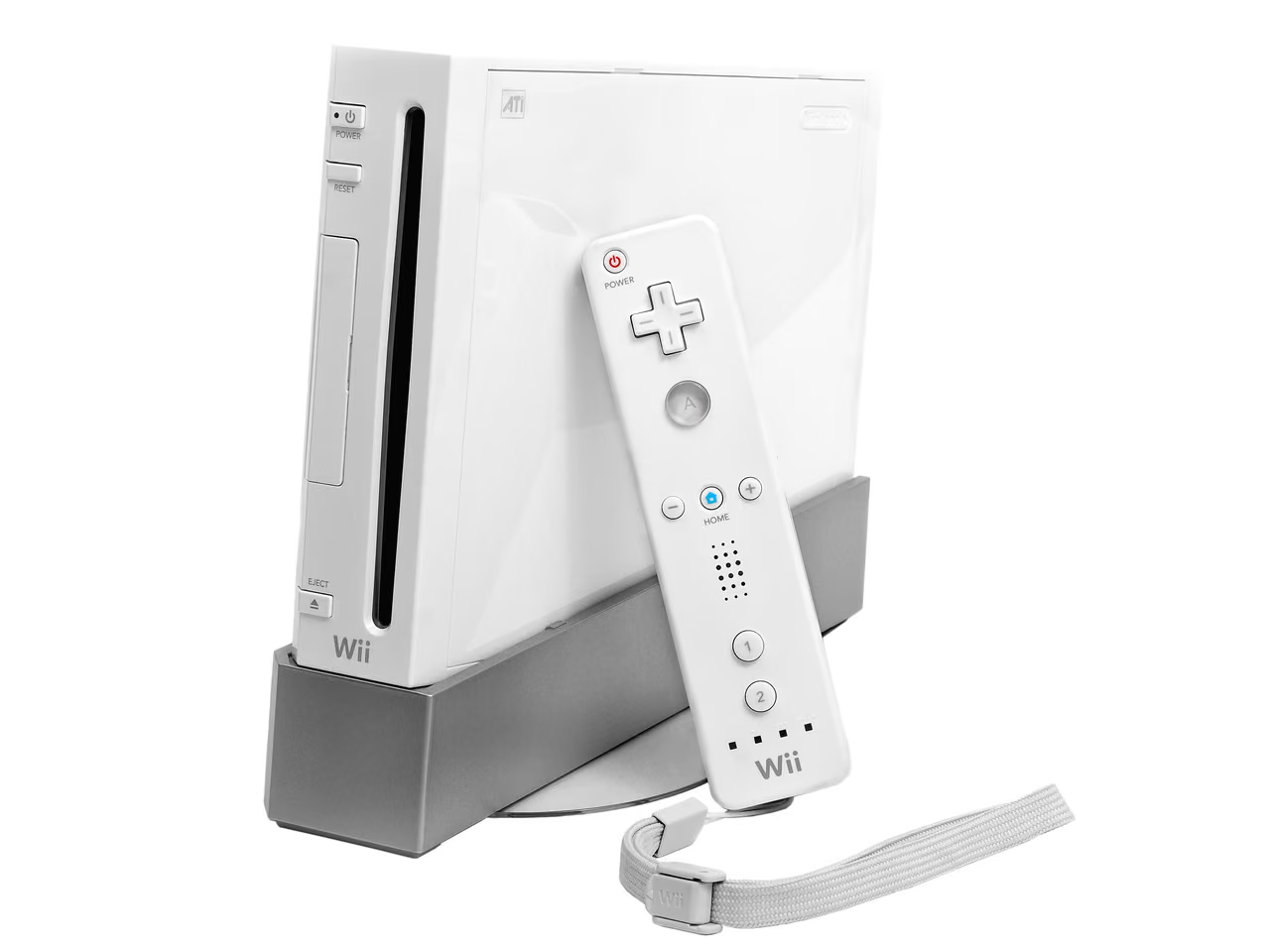
A Wii standing in its vertical stand, with a Wii Remote.

About this machine
The Wii record links Broadway, Hollywood, and installed memory as separate components, preserving the scope of each published hardware figure.
Configuration
Retail hardware
| Component | Role | Count | Clock | Capacity |
|---|---|---|---|---|
| IBM Broadway | Main CPU | 1 | 729 MHz Nominal clock | — |
| ATI Hollywood | GPU | 1 | 243 MHz Nominal clock | — |
| Nintendo Wii MEM1 | System memory | 1 | — | 24 MiB |
| Nintendo Wii MEM2 | Video memory | 1 | — | 64 MiB |
Figures for the whole machine
provisional A figure marked provisional is recorded but not accepted: its evidence is unsettled. It may rely on one source, an unconfirmed announcement, or a digit read from a damaged scan. The reason appears under the figure. The catalog shows the figure but never uses it in a multiplier. How records are judged.
| Metric | Value | Evidence | Basis | Method | Source |
|---|---|---|---|---|---|
| Clock frequency cpu provisional | 729 MHz | Rumored | Vendor-rated | Nominal clock From community documentation Nintendo's public manuals state no processor clock. Wikipedia gives 729 MHz for the Broadway processor, and the catalog carries it as rumored. | |
| Clock frequency gpu provisional | 243 MHz | Rumored | Vendor-rated | Nominal clock From community documentation Nintendo's public manuals state no graphics clock. Wikipedia gives 243 MHz for the Hollywood graphics processor, and the catalog carries it as rumored. |
4 documented absences
| Metric | Value | Evidence | Basis | Method | Source |
|---|---|---|---|---|---|
| Peak FP32 rate gpu provisional | unknown The registered technical source does not yet provide a standalone GPU FP32 rate with a stated precision and method. | Not stated | Vendor-rated | Theoretical peak Stated by the vendor Provisional record for nintendo-wii: the primary technical source is registered, but page-level transcription and independent review are pending. | |
| Memory bandwidth memory provisional | unknown The registered technical source does not yet provide a transcribed comparable memory transfer-rate figure. | Not stated | Vendor-rated | Theoretical peak Stated by the vendor Provisional record for nintendo-wii: the primary technical source is registered, but page-level transcription and independent review are pending. | |
| Memory capacity whole-system provisional | unknown No whole-system total can be derived from Nintendo's public Wii manuals. | Not stated | Vendor-rated | Design capacity Stated by the vendor Nintendo's public Wii manuals do not support a whole-system memory total. | |
| Rated power consumption whole-system provisional | unknown Nintendo's public Wii manuals do not state a whole-system power rating. | Not stated | Vendor-rated | Rated power Stated by the vendor Nintendo's public Wii manuals do not state a comparable whole-system power rating. |
Figures for its components
provisional A figure marked provisional is recorded but not accepted: its evidence is unsettled. It may rely on one source, an unconfirmed announcement, or a digit read from a damaged scan. The reason appears under the figure. The catalog shows the figure but never uses it in a multiplier. How records are judged.
| Metric | Value | Evidence | Basis | Method | Source |
|---|---|---|---|---|---|
| Memory capacity memory provisional | 24 MiB | Confirmed | Vendor-rated | Design capacity Stated by the vendor Two independent technical sources identify the MEM1 capacity. |
provisional A figure marked provisional is recorded but not accepted: its evidence is unsettled. It may rely on one source, an unconfirmed announcement, or a digit read from a damaged scan. The reason appears under the figure. The catalog shows the figure but never uses it in a multiplier. How records are judged.
| Metric | Value | Evidence | Basis | Method | Source |
|---|---|---|---|---|---|
| Memory capacity memory provisional | 64 MiB | Confirmed | Vendor-rated | Design capacity Stated by the vendor Two independent technical sources identify the MEM2 capacity. |
The bundled game that moved the console
Wii Sports entered The Strong National Museum of Play’s World Video Game Hall of Fame with the class of 2023. It was released in 2006 and bundled with consoles sold outside Japan, which is the fact the rest of the museum’s record rests on.
The record describes a design that left things out on purpose. Its baseball was pitching and hitting; a player never fielded a fly ball or ran the bases. The museum borrows the game critic Jesper Juul’s term “casual revolution” for this, and argues that matching an arm swing to what happened on screen removed a barrier for people who had no intention of memorizing a controller.
It then records where the game turned up. Senior centers ran bowling leagues on it for people who had bowled decades earlier but found a real ball too heavy, and in 2011 the health insurer Aetna sponsored a championship on its successor. The museum puts the console above 100 million units sold and the game itself above 82 million copies.