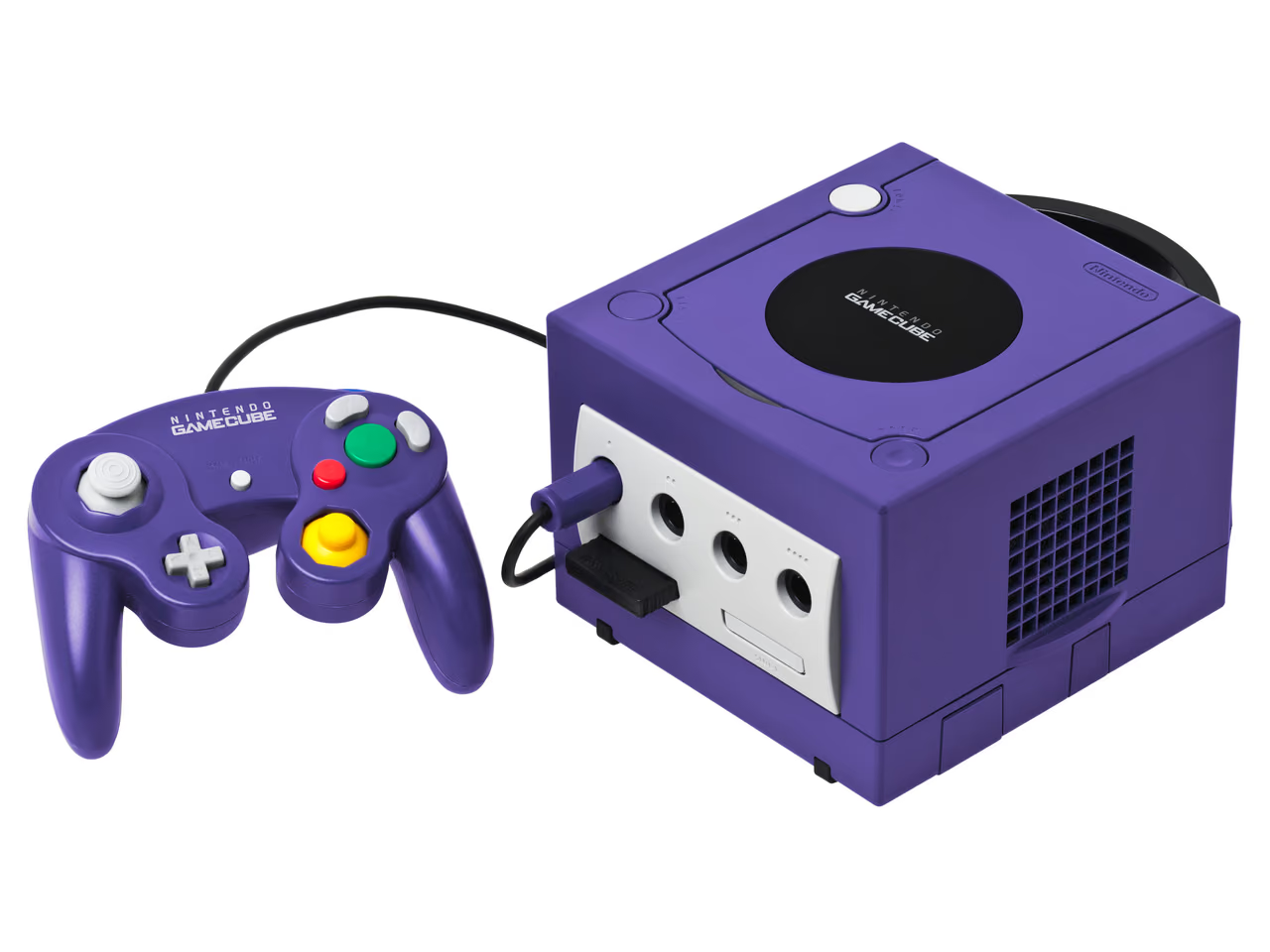
About this machine

The GameCube record separates the Gekko processor, Flipper graphics, and installed memory, so a clock or capacity does not become a console-wide claim.

Configuration

Retail hardware

Component Role Count Clock Capacity
IBM Gekko Main CPU 1 485 MHz Nominal clock
ATI Flipper GPU 1 162 MHz Nominal clock
Nintendo GameCube main memory System memory 1 24 MiB
Nintendo GameCube sound memory Dedicated to audio, and separate from the main 24 MiB. System memory 1 16 MiB

Figures for the whole machine

Nintendo GameCube: system figures

provisional A figure marked provisional is recorded but not accepted: its evidence is unsettled. It may rely on one source, an unconfirmed announcement, or a digit read from a damaged scan. The reason appears under the figure. The catalog shows the figure but never uses it in a multiplier. How records are judged.

Metric Value Evidence Basis Method Source
Clock frequency cpu 485 MHz Confirmed Vendor-rated Nominal clock Stated by the vendor The IBM "Gekko" processor of the shipped console. Nintendo states this in its own specification table, under the processor block. The row below it gives 1125 Dmips (Dhrystone 2.1), a rare vendor Dhrystone figure and a separate quantity this catalog has not yet opened.
Clock frequency gpu 162 MHz Confirmed Vendor-rated Nominal clock Stated by the vendor The ATI/Nintendo "Flipper" graphics part of the shipped console. The graphics part's own row. The processor's external bus runs at the same 162 MHz, which is one frequency serving two purposes rather than two figures that agree.
Memory bandwidth memory 2.6 GB/s Confirmed Vendor-rated Theoretical peak Stated by the vendor Main memory (24 MB 1T-SRAM), stated by Nintendo as a maximum. The path to main memory only. Nintendo states a separate 10,4 GB/s for texture access and 1,3 GB/s for the external bus, and the console's 16 MB of audio memory is a further pool again, so this is one of several rates in the machine, not a total.
Memory capacity whole-system 41 943 040 B Confirmed Derived Design capacity Computed here from figures the vendor stated Adds 2 memory-capacity figures obtained by design-capacity. Nothing in the catalog is left out of it. A total is only as trustworthy as the decision about what belongs in it, so both the terms and the exclusions are named records.
Rated power consumption whole-system 39 W Confirmed Derived Rated power Computed here from figures the vendor stated Bundled AC adapter at its rated DC output. Nintendo published the adapter's rating and never a wattage, so this is the product of the two figures in its own table rather than something it stated. Exact arithmetic for a direct-current supply, and still a supply rating: what the console actually draws is a smaller number nobody published.
Supply voltage whole-system 12 V Confirmed Vendor-rated Nameplate rating Stated by the vendor Bundled AC adapter, DC output. Half of the only power figure Nintendo published for this console: its specification table gives the adapter's rating and no wattage. Recorded on its own so the watts derived from it have something to cite.
Supply current whole-system 3.25 A Confirmed Vendor-rated Nameplate rating Stated by the vendor Bundled AC adapter, DC output. The other half of the adapter rating in Nintendo's specification table.
1 documented absence
Nintendo GameCube: system figures: documented absences
Metric Value Evidence Basis Method Source
Peak FP32 rate gpu provisional unknown Nintendo does publish a floating-point figure for this console — 10,5 GFLOPS (máximo) — and its own wording makes it a total across the processor, the geometry engine and the hardware lighting. A precision the publisher leaves unsaid is something this catalog now reads as single precision and carries as rumored, but an aggregate across unlike units is a different quantity, and no community article separates it. There is no standalone graphics rate to record. Not stated Vendor-rated Theoretical peak Stated by the vendor Provisional and unknown: Nintendo publishes a floating-point figure for this console that is explicitly a total across three units. The absence is of a standalone graphics rate, not of a number.

Figures for its components

Nintendo GameCube main memory
Metric Value Evidence Basis Method Source
Memory capacity memory 24 MiB Confirmed Vendor-rated Design capacity Stated by the vendor MoSys 1T-SRAM main memory of the shipped console. The main memory alone. Nintendo lists it beneath a stated system total of 40 MB, the rest of which is the console's dedicated sound memory, recorded as its own figure rather than folded in here.
Nintendo GameCube sound memory
Metric Value Evidence Basis Method Source
Memory capacity memory 16 MiB Confirmed Vendor-rated Design capacity Stated by the vendor 81 MHz DRAM reserved for sound on the shipped console. Dedicated to audio and not addressable as main memory, but part of the machine's memory all the same: Nintendo puts it under the same "Sistema de Memoria" heading and counts it into the 40 MB total it states there.

Derived figures and comparisons

Computed by this project rather than read from a source, and recomputed from their inputs on every build.

39 W

Formula
voltage × current power-from-voltage-current v1
Inputs
  • nintendo-gamecube Supply voltage: 12 V
  • nintendo-gamecube Supply current: 3.25 A
Rounding
half-up , 2 significant digits

Multiplies the two halves of a supply rating the maker published instead of a wattage. The arithmetic is exact for direct current — no power factor, nothing assumed — so this is not an estimate. It is still a rating and not a draw: a supply is specified for the worst case with headroom above it, and a machine at rest or at play may use a small fraction of it. Reported to 2 significant digits, the precision of the less precise of the two published figures.

41 943 040 B

Formula
a + b + … sum v1
Inputs
  • nintendo-gamecube-ram Memory capacity: 24 MiB
  • nintendo-gamecube-sound-ram Memory capacity: 16 MiB
Rounding
none , 8 significant digits

Adds 2 memory-capacity figures obtained by design-capacity. Nothing in the catalog is left out of it. A total is only as trustworthy as the decision about what belongs in it, so both the terms and the exclusions are named records.

Sources

Back to top