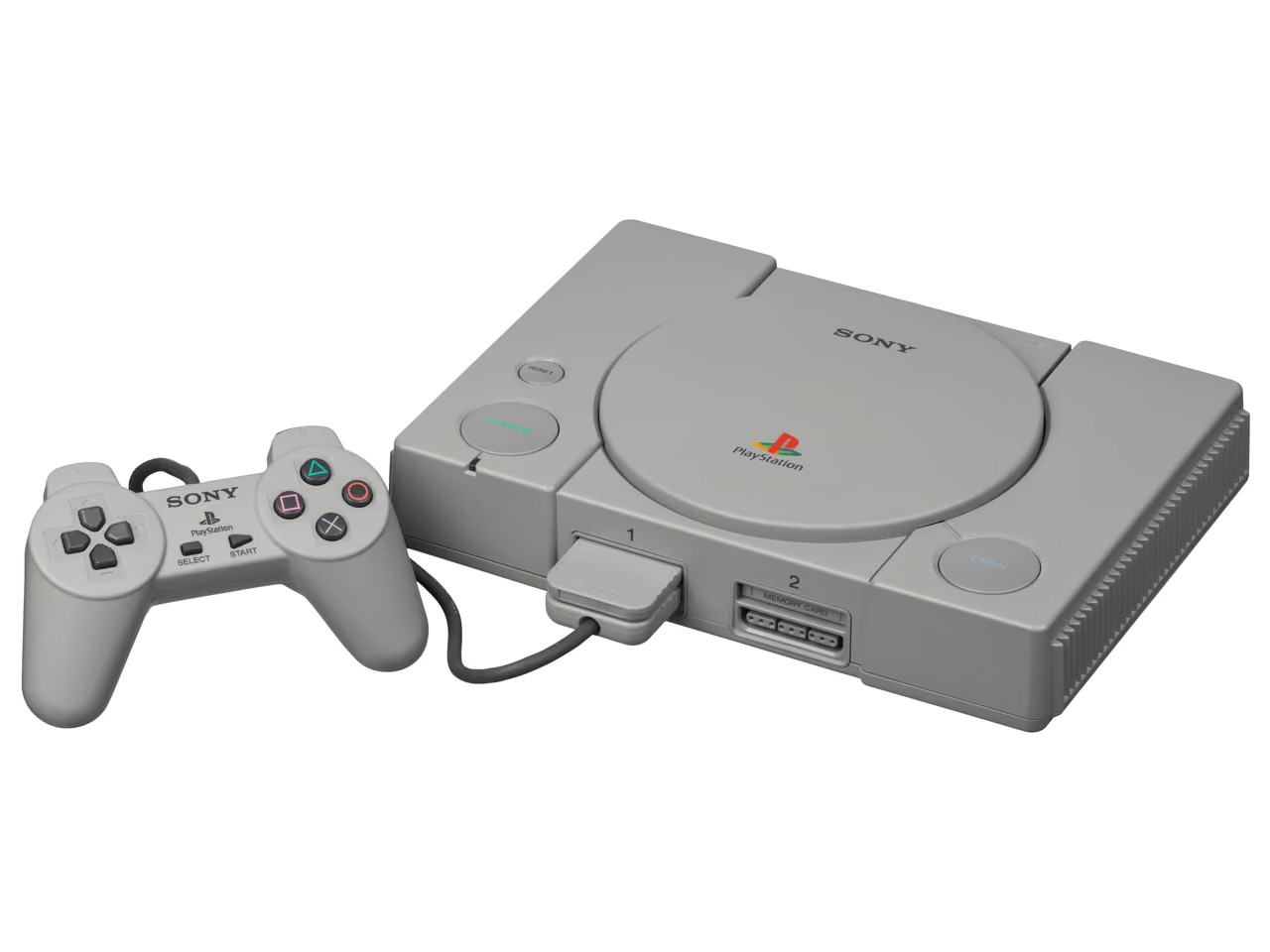
About this machine

The PlayStation divides its 3D work among components rather than leaving it with the processor. Its CPU is a customized R3000A at 33.8688 MHz. The GTE, a coprocessor beside the integer core, handles coordinate transformation and lighting; a separate GPU with its own memory handles drawing. No single component's specification describes the console, so the record models four of them and shows how the work is divided.

It is also the first console here. Consoles differ from the home computers that precede them. The Commodore 64 and the Amigas take their clock from the television standard, so PAL and NTSC machines run at different speeds. The PlayStation's clock is the same everywhere, so it has one configuration rather than two.

Configuration

Retail console

Component Role Count Clock Capacity
PlayStation CPU (customized MIPS R3000A) The same rate in every region; the console's clock is not derived from the television standard. Main CPU 1 33.8688 MHz Nominal clock
PlayStation GPU GPU 1 unknown Nominal clock
PlayStation main memory System memory 1 2 MiB
PlayStation video memory Reachable by the GPU, not shared with the CPU. Transfers go by DMA. Video memory 1 1 MiB

Figures for the whole machine

Sony PlayStation: system figures
Metric Value Evidence Basis Method Source
Clock frequency cpu 33.8688 MHz Confirmed Vendor-rated Nominal clock Stated by the vendor System clock of the customized R3000A, per table 2-1. Identical in every region. Describes the integer core only. Geometry and lighting run on the GTE coprocessor and drawing runs on a separate GPU, so this figure covers less of the console's work than a processor clock usually does.
Memory capacity whole-system 2 MiB Confirmed Derived Design capacity Computed here from figures the vendor stated Main memory, which is the whole of the machine’s general-purpose store. Adds 1 memory-capacity figure obtained by design-capacity. Left out: 1 MiB of video memory (owned by the drawing processor and not part of the CPU’s working store). A total is only as trustworthy as the decision about what belongs in it, so both the terms and the exclusions are named records.
Rated power consumption whole-system 17 W Confirmed Vendor-rated Rated power Stated by the vendor Rating printed in the instruction manual supplied with the SCPH-7501 console of 1997. A supply rating for the SCPH-7501 revision, not for the SCPH-1001 that launched in 1995. Sony shrank and simplified the console repeatedly over its life, so a later revision draws less than the first, and this figure is recorded against the machine with the revision named, the same arrangement as the PlayStation 2’s rating, which comes from the SCPH-39001 manual. The developer reference this record otherwise rests on rates no power at all.
3 documented absences
Sony PlayStation: system figures: documented absences
Metric Value Evidence Basis Method Source
Clock frequency gpu unknown The developer reference gives one system clock, in the processor’s specification table, and states no separate frequency for the drawing processor or the geometry engine. Not stated Vendor-rated Nominal clock Stated by the vendor Unknown, and it is the same finding the processor clock already carries from the other side: this is the machine where one frequency stops describing the hardware. Three chips do the 3D work and the manual times only the first of them.
Peak FP32 rate gpu not applicable Sony’s developer reference states that the geometry transform engine works in fixed-point format. A machine whose 3D arithmetic is fixed point has no floating-point rate to state, in the same way the 6510 has none. Not stated Vendor-rated Theoretical peak Stated by the vendor Not-applicable on a citation rather than on an inference. The catalog held nothing here because Sony’s reference never mentioned floating-point hardware, and absent evidence is not evidence of absence; the overview chapter does say what the engine computes in, which is the citation not-applicable needs. The console draws in three dimensions at speed and does it without a floating-point unit, which is why the wobbling geometry of the era looks the way it does.
Memory bandwidth memory unknown The developer reference states the capacity of main memory and of video memory and the bus width, and no transfer rate for either. Not stated Vendor-rated Theoretical peak Stated by the vendor Unknown for both pools. The reference is unusually clear that they are separate — the processor cannot reach video memory directly — so even a stated rate would have been two rates, not one.

Figures for its components

PlayStation main memory
Metric Value Evidence Basis Method Source
Memory capacity memory 2 MiB Confirmed Vendor-rated Design capacity Stated by the vendor Main memory installed in the console. No TLB is fitted, so the physical map is fixed. The manual writes "2 MB", meaning 2 MiB. Video memory is a separate 1 MiB and is not part of this figure; the two are not one pool and adding them would describe memory the console cannot use interchangeably.
PlayStation video memory
Metric Value Evidence Basis Method Source
Memory capacity memory 1 MiB Confirmed Vendor-rated Design capacity Stated by the vendor Video memory attached to the GPU, holding the frame buffer, texture pages and color lookup tables. Reachable by the GPU rather than by the CPU, so it answers a different question from main memory, the same distinction the Amiga draws between Chip and Fast memory.

Derived figures and comparisons

Computed by this project rather than read from a source, and recomputed from their inputs on every build.

2 097 152 B

Formula
a + b + … sum v1
Inputs
  • psx-main-ram Memory capacity: 2 MiB
Rounding
none , 7 significant digits

Adds 1 memory-capacity figure obtained by design-capacity. Left out: 1 MiB (owned by the drawing processor and not part of the CPU’s working store). A total is only as trustworthy as the decision about what belongs in it, so both the terms and the exclusions are named records.

Editorial notes

The release date is editorial context; the cited developer reference documents the hardware without dating the launch. That reference is the August 1998 revision, four years after release, but it describes the same retail hardware. No floating-point figure is recorded: the reference does not describe floating-point hardware on this processor, and inferring its absence would be a claim without a citation.

Sources

Back to top