A 200 MHz SH-4 with a floating-point unit and a published FLOPS figure, plus a 100 MHz PowerVR2 graphics chip. Its separate memory pools provide 16 MiB of main RAM, 8 MiB of texture RAM and 2 MiB of audio RAM.
Manufacturer
SEGA Enterprises
Released
November 1998
Region
Worldwide
Record status
approved
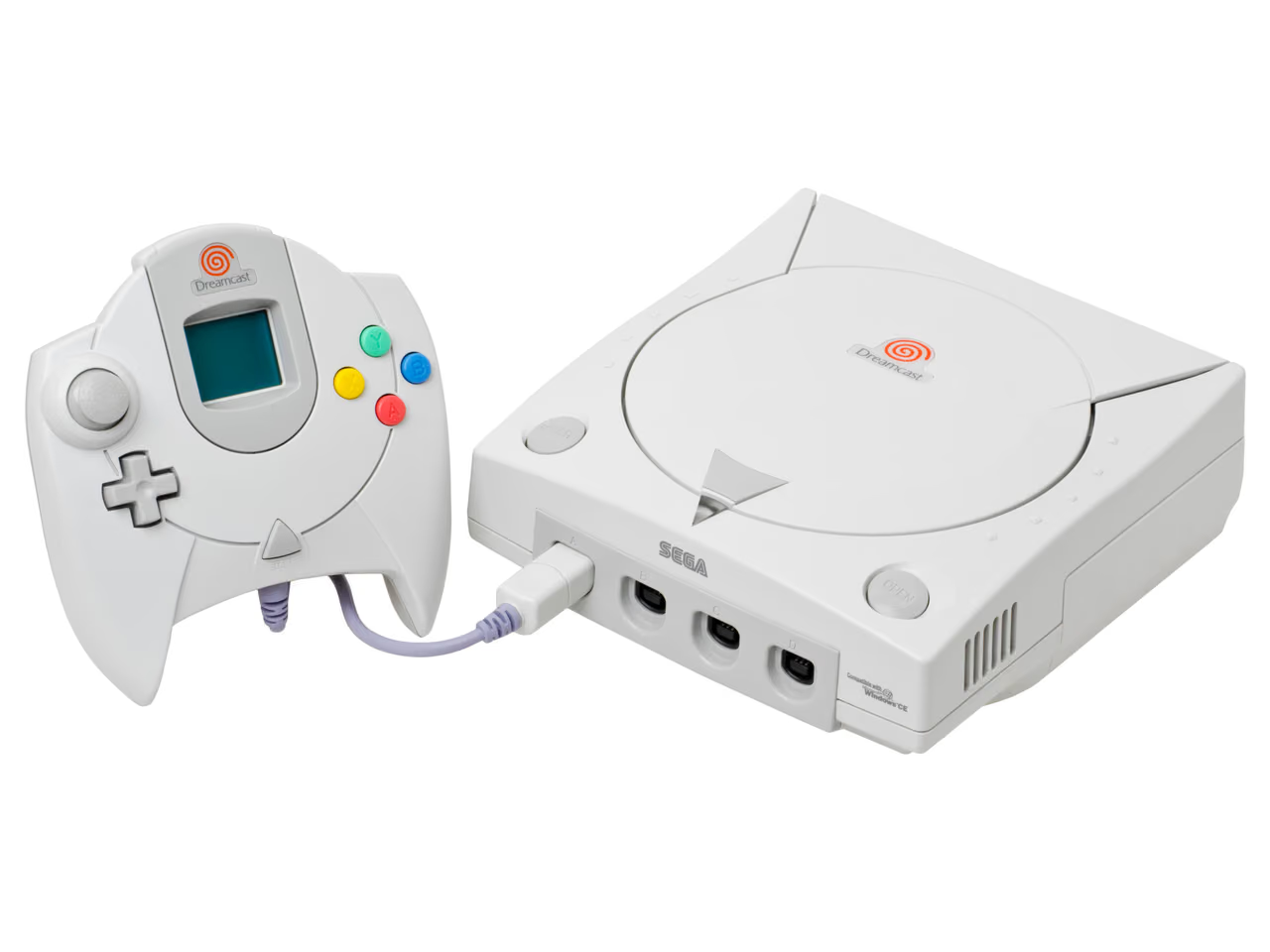
A Sega Dreamcast with its controller; the small screen in the pad is a memory unit slotted into it.
The Dreamcast is the first console here with a published floating-point rate and instruction rate for its processor. Sega's outline gives both for the SH-4. The PlayStation reference gives neither, and the Nintendo 64's is too damaged to read either figure. It is also the first console here whose processor has an IEEE 754 floating-point unit.
Its memory is the opposite of the Nintendo 64's. Where that machine shares one 4 MiB pool between processor, geometry and rasterizer, the Dreamcast keeps 16 MiB of main memory, 8 MiB of texture memory and 2 MiB of audio memory apart. The specification states explicitly that the SH-4 does not share texture or audio data with main memory. These are separate budgets; none can be spent on another's work.
Configuration
Retail console
Component
Role
Count
Clock
Capacity
Hitachi SH-4 Internal clock. The external bus runs at 100 MHz and peripherals at 50 MHz.
Nominal clock Stated by the vendorSH-4 internal clock. The external bus runs at 100 MHz and the peripheral clock at 50 MHz, all derived from a 33.3 MHz PLL output.The internal rate. Quoting it against a machine whose published clock is an external bus rate would compare two different things.
Design capacity Computed here from figures the vendor statedMain memory. The machine has three separate stores and only this one is general.Adds 1 memory-capacity figure obtained by design-capacity. Left out: 8 MiB of texture memory (attached to the graphics processor rather than to the CPU); 2 MiB of sound memory (the sound processor’s own store, reachable only across the peripheral bus). A total is only as trustworthy as the decision about what belongs in it, so both the terms and the exclusions are named records.
Theoretical peak Computed here from figures the vendor statedThe bus to main memory. The texture and sound stores have bandwidths of their own that no source consulted here states.Adds 1 memory-bandwidth figure obtained by theoretical-peak. Nothing in the catalog is left out of it. A total is only as trustworthy as the decision about what belongs in it, so both the terms and the exclusions are named records.
provisional A figure marked provisional is recorded but not accepted: its evidence is unsettled. It may rely on one source, an unconfirmed announcement, or a digit read from a damaged scan. The reason appears under the figure. The catalog shows the figure but never uses it in a multiplier. How records are judged.
Metric
Value
Evidence
Basis
Method
Source
Native instruction ratecpu
360 MIPS
Confirmed
Vendor-rated
Theoretical peak Stated by the vendorStated by Sega as "360MIPS (core)" in the SH-4 features table, with no benchmark named.A vendor figure with no stated method. It is not a Dhrystone result and must never be compared with one, and because no benchmark is named it is not comparable with any other machine's instruction rate either, only with figures obtained the same way, of which this dataset has none.
Matrix instruction peak Stated by the vendorStated as "1.4GFLOP (matrix multiplication)" in the SH-4 features table.Held provisional because the source does not state a precision. The FPU row directly above it offers both single and double IEEE 754, and a floating-point rate without its precision is the single most common way hardware comparisons go wrong. Recorded here as single precision on the strength of the operation named, which is an editorial reading rather than a citation, so the figure stays out of automatic multipliers until a source states the precision outright.
Rated power Stated by the vendorThe 200 MHz part, which is the speed grade the console fits. Hitachi states it as typical.The processor’s rating, not the console’s: Sega publishes no figure for the machine, and this answers a narrower question than the Amiga 1200’s 23 watts or the Mac mini’s 150 watts, which are whole-machine ratings. The scope keeps them in separate rows for exactly that reason. "Typical" is the manufacturer’s own hedge and nothing here was measured.
Design capacity Stated by the vendorBase system space. SDRAM directly connected to the SH-4 on a 64 bit bus.Main memory only. The console has a further 8 MiB of texture memory and 2 MiB of audio memory that this figure excludes, and the specification states outright that the SH-4 does not share texture or audio data with main memory.
Theoretical peak Stated by the vendorMaximum burst transfer on the 64 bit main-memory bus at 100 MHz. The specification calls it a theoretical value.A bus ceiling, not a measured throughput, and the source says so in as many words. It describes main memory only; texture and audio memory have their own paths.
Computed by this project rather than read from a source, and recomputed from their inputs on
every build.
16 777 216 B
Formula
a + b + …sum v1
Inputs
dreamcast-main-ram Memory capacity: 16 MiB
Rounding
none , 8 significant digits
Adds 1 memory-capacity figure obtained by design-capacity. Left out: 8 MiB (attached to the graphics processor rather than to the CPU); 2 MiB (the sound processor’s own store, reachable only across the peripheral bus). A total is only as trustworthy as the decision about what belongs in it, so both the terms and the exclusions are named records.
800 000 000 B/s
Formula
a + b + …sum v1
Inputs
dreamcast-main-ram Memory bandwidth: 800 MB/s
Rounding
none , 9 significant digits
Adds 1 memory-bandwidth figure obtained by theoretical-peak. Nothing in the catalog is left out of it. A total is only as trustworthy as the decision about what belongs in it, so both the terms and the exclusions are named records.
Editorial notes
The release date is editorial context; the cited outline is dated September 1999 and does not date the launch. Sega's polygon-performance figures (3 million per second at peak, 1.5 million visible) are not recorded as measurements: the catalog has no polygon-rate metric, and adding one for a single console would produce a figure nothing else could be compared against. The expansion maxima quoted in the specification describe development hardware, not retail machines.
Sources
Dreamcast Hardware Specification Outline SEGA Enterprises, Development Department · tier A · Section 1.2 "System specification" p. 3; section 2.1 "Features of SH4", table 2-1, p. 7; section 2.3 "Main memory" p. 8