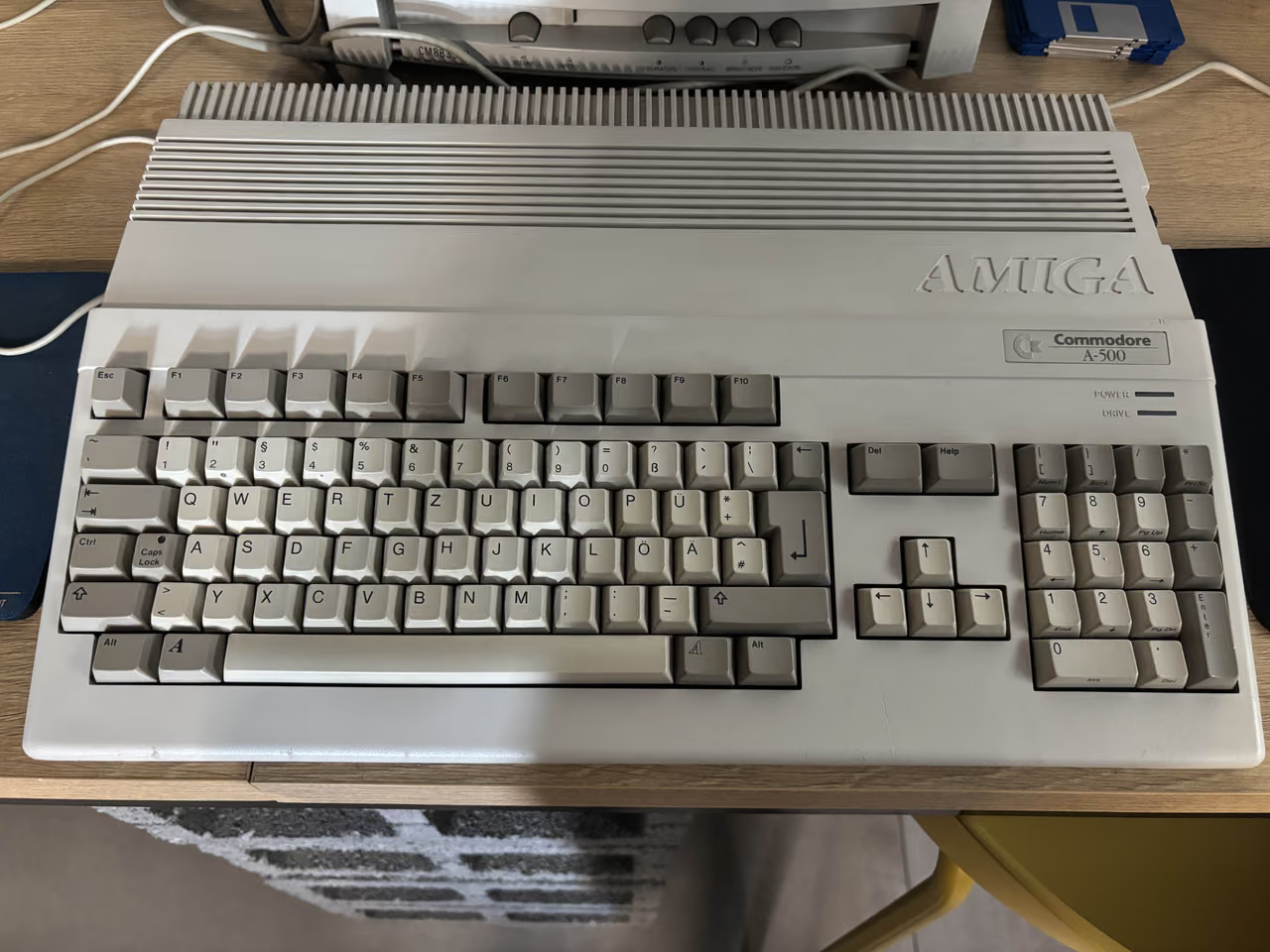
About this machine

The Amiga 500 shows why a processor clock alone says little. Its 68000 runs at 7.09379 MHz on PAL machines and 7.15909 MHz on NTSC ones. Both derive, like the Commodore 64's, from the video crystal rather than from a frequency chosen for the CPU. The custom chips work directly on memory while the processor does something else: Agnus runs the blitter and copper, Denise drives the display and sprites, and Paula handles audio and I/O. That architecture is also why memory is recorded here as two separate figures. Chip memory is what the custom chips can reach; Fast memory is what only the CPU can see. A single "RAM" number for an Amiga hides the distinction that determines what the machine can display and play.

Configuration

PAL

Europe

Component Role Count Clock Capacity
Motorola MC68000 Derived from the 28.37516 MHz PAL base crystal. Main CPU 1 7.09379 MHz Nominal clock
Amiga Original Chip Set (Agnus and Denise) GPU 1 unknown Nominal clock
Amiga 500 Chip memory Shared between the 68000 and the custom chips. Expandable to 1 MiB with a later Agnus. System memory 1 512 KiB shared

NTSC

North America

Component Role Count Clock Capacity
Motorola MC68000 Derived from the 28.63636 MHz NTSC base crystal. Main CPU 1 7.15909 MHz Nominal clock
Amiga Original Chip Set (Agnus and Denise) GPU 1 unknown Nominal clock
Amiga 500 Chip memory System memory 1 512 KiB shared

Figures for the whole machine

Commodore Amiga 500: system figures
Metric Value Evidence Basis Method Source
Clock frequency cpu 7.15909 MHz Confirmed Vendor-rated Nominal clock Stated by the vendor NTSC machines with the stock system clock, derived from the 28.63636 MHz base crystal.
Clock frequency cpu 7.09379 MHz Confirmed Vendor-rated Nominal clock Stated by the vendor PAL machines with the stock system clock, derived from the 28.37516 MHz base crystal. The manual notes these rates can vary with an external system clock, such as from a genlock board. The figure describes the processor only; the custom chips do much of the machine's work in parallel with it.
Memory capacity whole-system 1 MiB Confirmed Vendor-rated Design capacity Stated by the vendor Total RAM of the base model in the manual's third edition. The maximum is 9 MiB. The third edition dates from 1991, and its base Amiga 500 is a later machine than the 512 KiB one sold in 1987. Chip memory is a subset of this figure, not an addition to it.
3 documented absences
Commodore Amiga 500: system figures: documented absences
Metric Value Evidence Basis Method Source
Clock frequency gpu unknown The Hardware Reference Manual describes the custom chips by the clocks the bus carries them — a 7.16 MHz system clock, a 3.58 MHz color clock — and never gives the chipset a frequency of its own. Not stated Vendor-rated Nominal clock Stated by the vendor Unknown rather than not-applicable. The Commodore 64’s manual names a single video dot clock, while the Amiga’s names several clocks the display hardware runs from and leaves which one is "the chipset’s" to the reader. Picking one would be this project answering a question the document declines to.
Memory bandwidth memory unknown The manual states which parts of memory the custom chips can reach and how bus cycles are shared between them, and states no transfer rate. Not stated Vendor-rated Theoretical peak Stated by the vendor Unknown, not not-applicable. What the manual gives instead is more useful than a rate and less summarizable: Chip memory is the pool the display hardware can see, and the cycles it takes are cycles the processor does not get.
Rated power consumption whole-system unknown The Hardware Reference Manual is a programming document and rates no power for the machine; the supply figures in it are for expansion cards drawing from the bus. Not stated Vendor-rated Rated power Stated by the vendor The Amiga 1200 states 23 watts because its service manual has a specification table. No such table has been found for the A500 in a source this catalog accepts, so the question stays open rather than being answered from an enthusiast page.

Figures for its components

1 documented absence
Motorola MC68000: documented absences
Metric Value Evidence Basis Method Source
Peak FP32 rate cpu not applicable The 68000 has no floating-point hardware on the die. Floating point requires a separate 68881 or 68882 coprocessor, which the Amiga 500 does not have, so any floating-point rate would describe software running on an integer ALU. Not stated Vendor-rated Theoretical peak Stated by the vendor
Amiga 500 Chip memory
Metric Value Evidence Basis Method Source
Memory capacity memory 512 KiB Confirmed Vendor-rated Design capacity Stated by the vendor Chip memory in a base Amiga 500, per table 1-1. The maximum with a later Agnus is 1 MiB. Chip memory only: what the custom chips can reach. It is not the machine's total RAM, and the two are not interchangeable: Fast memory is invisible to the graphics and audio hardware.

Derived figures and comparisons

Computed by this project rather than read from a source, and recomputed from their inputs on every build.

1.00921×

Formula
a ÷ b ratio v1
Inputs
  • amiga-500 Clock frequency: 7.15909 MHz
  • amiga-500 Clock frequency: 7.09379 MHz
Rounding
half-up , 6 significant digits

Compares clock-frequency at cpu scope, obtained by nominal-clock. Valid only within this comparability group, and reported to 6 significant digits — the precision of the least precise input.

Editorial notes

The release date is editorial context; the cited manual documents the hardware without dating the model's launch. The manual is the 1991 third edition, whose table of memory configurations describes a later base machine than the 512 KiB Amiga 500 of 1987. The figures recorded here identify the column they came from.

Sources

Back to top