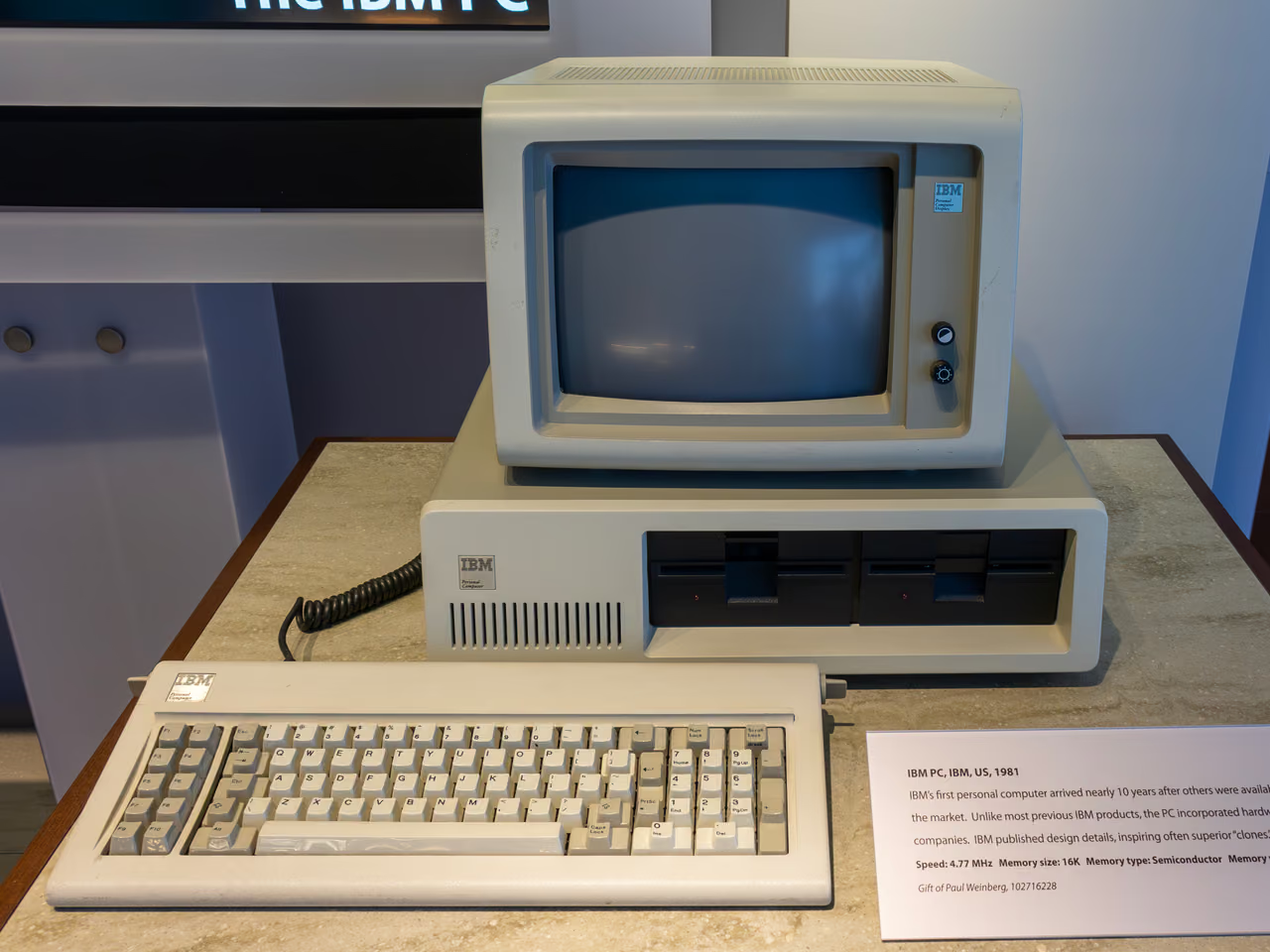
About this machine

The 5150's BIOS and Cassette BASIC live in ROM, so the record keeps the read-only capacity separate from base RAM and excludes it from whole-system writable memory.

Configuration

Original 16 KiB base configuration

United States

Component Role Count Clock Capacity
Intel 8088 Main CPU 1 4.77 MHz Nominal clock —
IBM PC display adapter Representative display-adapter option; the system board has no fixed GPU. GPU 1 not applicable Nominal clock —
IBM PC 5150 system RAM System memory 1 — 16 KiB
IBM PC 5150 firmware ROM Read-only BIOS and Cassette BASIC ROM. System memory 1 — 40 KiB

Figures for the whole machine

IBM Personal Computer 5150: system figures
Metric Value Evidence Basis Method Source
Clock frequency cpu 4.77 MHz Confirmed Vendor-rated Nominal clock Stated by the vendor
Memory bandwidth memory 1.19 MB/s Confirmed Derived Theoretical peak Computed here from figures the vendor stated Divides bytes transferred by one processor memory cycle by the published memory cycle time. The result is an interface ceiling inferred from the transfer width and cycle time. It is not measured application throughput: refresh, contention and wait states can consume cycles. Reported to 3 significant digits. That is the precision of the cycle time, because the bytes-per-cycle constant is exact.
Memory cycle time memory 840 ns Confirmed Vendor-rated Nominal cycle time Stated by the vendorOne processor generated memory read or write cycle with Ready inactive.
Memory capacity whole-system 16 384 B Confirmed Derived Design capacity Computed here from figures the vendor stated Adds 1 memory-capacity figure obtained by design-capacity. Left out: 40 KiB of BIOS and BASIC ROM (read-only firmware, not memory the machine can write to). A total is only as trustworthy as the decision about what belongs in it, so both the terms and the exclusions are named records.
2 documented absences
IBM Personal Computer 5150: system figures: documented absences
Metric Value Evidence Basis Method Source
Clock frequency gpu not applicable The 5150 supports different display adapters, so there is no single system GPU clock. Not stated Vendor-rated Nominal clock Stated by the vendor
Rated power consumption whole-system unknown The source specifies power-supply limits, not a system consumption rating. Not stated Vendor-rated Rated power Stated by the vendor

Figures for its components

1 documented absence
Intel 8088: documented absences
Metric Value Evidence Basis Method Source
Peak FP32 rate cpu not applicable The selected 5150 configuration contains no 8087 floating-point coprocessor. Not stated Vendor-rated Theoretical peak Stated by the vendor
IBM PC 5150 system RAM
Metric Value Evidence Basis Method Source
Memory capacity memory 16 KiB Confirmed Vendor-rated Design capacity Stated by the vendor
IBM PC 5150 firmware ROM
Metric Value Evidence Basis Method Source
Memory capacity memory 40 KiB Confirmed Vendor-rated Design capacity Stated by the vendor

Derived figures and comparisons

Computed by this project rather than read from a source, and recomputed from their inputs on every build.

1 190 000 B/s

Formula
bytes per memory cycle ÷ memory cycle time memory-bandwidth-from-cycle-time v1
Inputs
  • ibm-pc-5150 Memory cycle time: 840 ns
Constants
  • bytes transferred by one processor memory cycle: 1 IBM gives the cycle time as "ns/byte", so the stated processor-generated memory cycle transfers one byte.
Rounding
half-up , 3 significant digits

Divides bytes transferred by one processor memory cycle by the published memory cycle time. The result is an interface ceiling inferred from the transfer width and cycle time. It is not measured application throughput: refresh, contention and wait states can consume cycles. Reported to 3 significant digits. That is the precision of the cycle time, because the bytes-per-cycle constant is exact.

16 384 B

Formula
a + b + … sum v1
Inputs
  • ibm-pc-5150-ram Memory capacity: 16 KiB
Rounding
none , 5 significant digits

Adds 1 memory-capacity figure obtained by design-capacity. Left out: 40 KiB (read-only firmware, not memory the machine can write to). A total is only as trustworthy as the decision about what belongs in it, so both the terms and the exclusions are named records.

The machine everyone else copied

Cultural and historical context, cited but not evidence. No figure in the tables above rests on any of it.

The Computer History Museum’s timeline entry for 1981 gives this machine its formal name, the IBM Model 5150, and its parts: a 4.77 MHz Intel 8088 and Microsoft’s MS-DOS. The museum’s reading is that IBM’s brand recognition and a large marketing campaign are what set the personal computer market growing quickly, and that the machine changed business computing by being taken up across industry.

The more consequential part of the entry is about what other companies did next. The museum records the machine being widely cloned, and an ecosystem of software, peripherals and commodity parts growing up around the platform as a result.

A companion entry on the same page follows the software half. MS-DOS shipped with the machine and began a long partnership between IBM and Microsoft, a company Bill Gates and Paul Allen had founded six years earlier. The museum notes that the imitators copied IBM’s hardware, but mostly licensed Microsoft’s operating system rather than writing their own.

  • Timeline of Computer History, 1981 Computer History Museum · tier B · Computers, "IBM introduces its Personal Computer (PC)"; Software & Languages, "MS-DOS released with the IBM PC"

Sources

Back to top