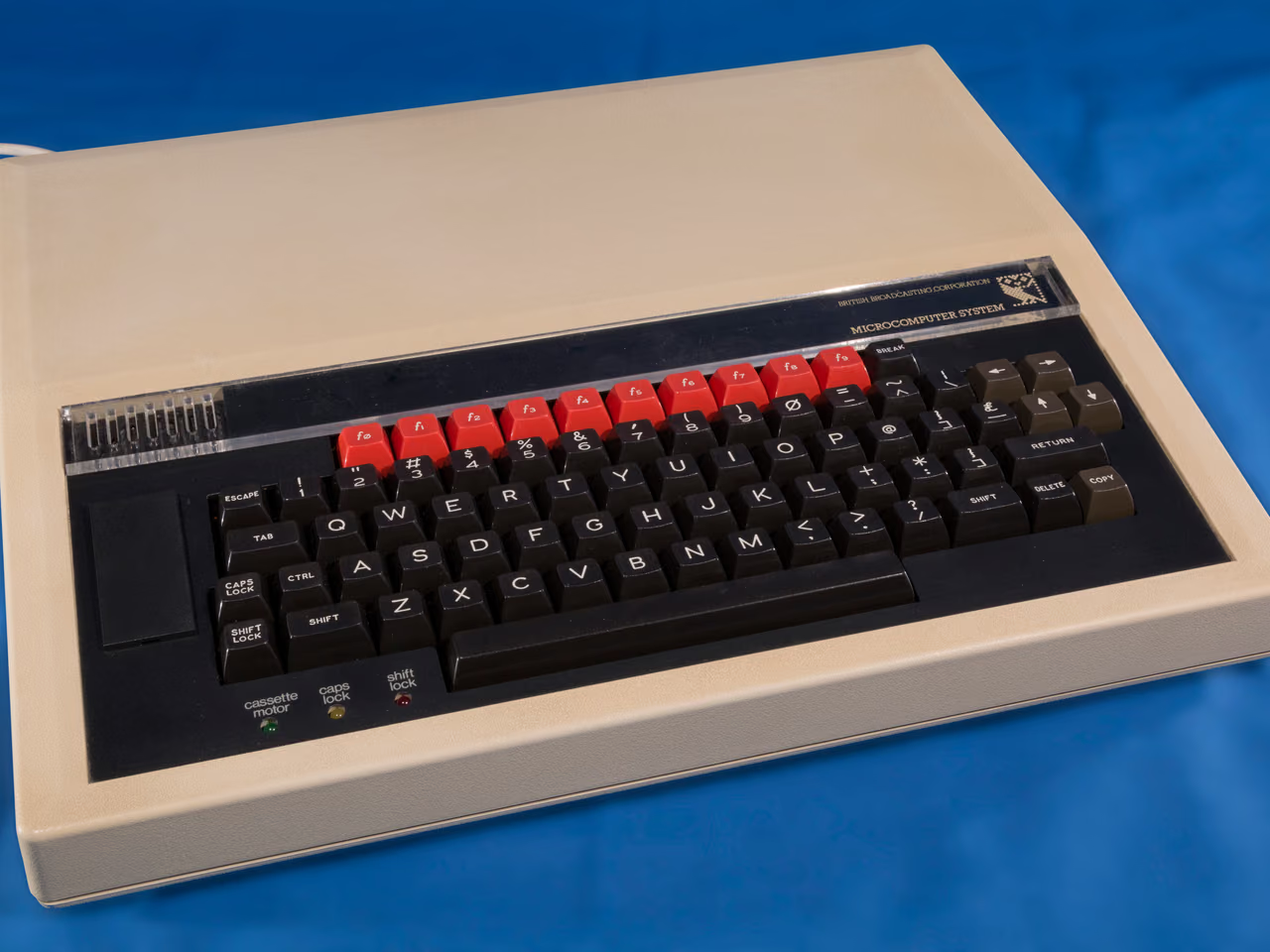
About this machine

The Model B's writable RAM and its MOS/BASIC ROM are both addressable system stores, but only the former belongs in the whole-system memory sum.

Configuration

Retail Model B

United Kingdom

Component Role Count Clock Capacity
MOS Technology 6502 Main CPU 1 2 MHz Nominal clock —
BBC Micro Video ULA GPU 1 unknown Nominal clock —
BBC Micro Model B RAM System memory 1 — 32 KiB shared
BBC Micro Model B ROM Read-only MOS and BASIC firmware. System memory 1 — 32 KiB shared

Figures for the whole machine

BBC Micro Model B: system figures
Metric Value Evidence Basis Method Source
Clock frequency cpu 2 MHz Confirmed Vendor-rated Nominal clock Stated by the vendor
Memory bandwidth memory 4.00 MB/s Confirmed Derived Theoretical peak Computed here from figures the vendor stated Divides bytes transferred by one shared-RAM access by the published memory cycle time. The result is an interface ceiling inferred from the transfer width and cycle time. It is not measured application throughput: refresh, contention and wait states can consume cycles. Reported to 3 significant digits. That is the precision of the cycle time, because the bytes-per-cycle constant is exact.
Memory cycle time memory 250 ns Confirmed Vendor-rated Nominal cycle time Stated by the vendorOne shared-RAM access; control alternates between the processor and CRTC.
Memory capacity whole-system 32 768 B Confirmed Derived Design capacity Computed here from figures the vendor stated Adds 1 memory-capacity figure obtained by design-capacity. Left out: 32 KiB of MOS and BASIC ROM (read-only firmware, not memory the machine can write to). A total is only as trustworthy as the decision about what belongs in it, so both the terms and the exclusions are named records.
3 documented absences
BBC Micro Model B: system figures: documented absences
Metric Value Evidence Basis Method Source
Clock frequency gpu unknown The documentation describes the ULA's timing functions without a standalone GPU frequency. Not stated Vendor-rated Nominal clock Stated by the vendor
Sustained FP40 rate whole-system unknown The non-IEEE BASIC format may be recorded only with a named reproducible benchmark run. Not stated Measured Benchmark run Published independently
Rated power consumption whole-system unknown The documented PSU rail capability is not a whole-system consumption rating. Not stated Vendor-rated Rated power Stated by the vendor

Figures for its components

1 documented absence
MOS Technology 6502: documented absences
Metric Value Evidence Basis Method Source
Peak FP32 rate cpu unknown The detailed hardware documentation does not identify a floating-point processor in the standard Model B. Not stated Vendor-rated Theoretical peak Stated by the vendor
BBC Micro Model B RAM
Metric Value Evidence Basis Method Source
Memory capacity memory 32 KiB Confirmed Vendor-rated Design capacity Stated by the vendor
BBC Micro Model B ROM
Metric Value Evidence Basis Method Source
Memory capacity memory 32 KiB Confirmed Vendor-rated Design capacity Stated by the vendor

Derived figures and comparisons

Computed by this project rather than read from a source, and recomputed from their inputs on every build.

4 000 000 B/s

Formula
bytes per memory cycle ÷ memory cycle time memory-bandwidth-from-cycle-time v1
Inputs
  • bbc-micro-model-b Memory cycle time: 250 ns
Constants
  • bytes transferred by one shared-RAM access: 1 The manual describes a data path for all eight data bits, so each cited RAM access transfers one byte.
Rounding
none , 3 significant digits

Divides bytes transferred by one shared-RAM access by the published memory cycle time. The result is an interface ceiling inferred from the transfer width and cycle time. It is not measured application throughput: refresh, contention and wait states can consume cycles. Reported to 3 significant digits. That is the precision of the cycle time, because the bytes-per-cycle constant is exact.

32 768 B

Formula
a + b + … sum v1
Inputs
  • bbc-micro-ram Memory capacity: 32 KiB
Rounding
none , 5 significant digits

Adds 1 memory-capacity figure obtained by design-capacity. Left out: 32 KiB (read-only firmware, not memory the machine can write to). A total is only as trustworthy as the decision about what belongs in it, so both the terms and the exclusions are named records.

A schools machine, and a gold one

Cultural and historical context, cited but not evidence. No figure in the tables above rests on any of it.

The Science Museum Group holds a 1986 Model B, catalogued as object 2022-651. Its curatorial note explains what the machine was made for. Acorn designed and built it between 1981 and 1994 for the government-backed BBC Computer Literacy Project, which set out to prepare people for what microprocessors and home computers were going to do, using television and radio programs, publications, software and courses alongside the hardware.

The note gives one number for how far that went: around 80 percent of British schools had one. The museum’s reading is that this introduced a generation of schoolchildren both to computers and to programming as something creative rather than merely technical. It traces the line forward too, to ARM, whose processors now run in devices from phones to the supercomputer Fugaku.

The same collection holds a stranger object, 2008-5: a gold-plated BBC Micro with two one-megabyte disc drives, made in 1985. It was a competition prize for the second anniversary of The Micro User magazine, and entrants had to describe five articles they expected the magazine to print within three years. The curatorial note follows the plating through its trade: a gold casing built by Universal Communications Company over more than a month, base units worked by hand so the gold would take, and the dipping done by B & W Plating in Crawley.

Sources

Back to top