Home computer
Apple II
A 1.023 MHz 6502 home computer with configuration-dependent motherboard RAM and ROM-resident Integer BASIC.
- Manufacturer
- Apple Computer
- Released
- June 1977
- Region
- United States
- Record status
- approved
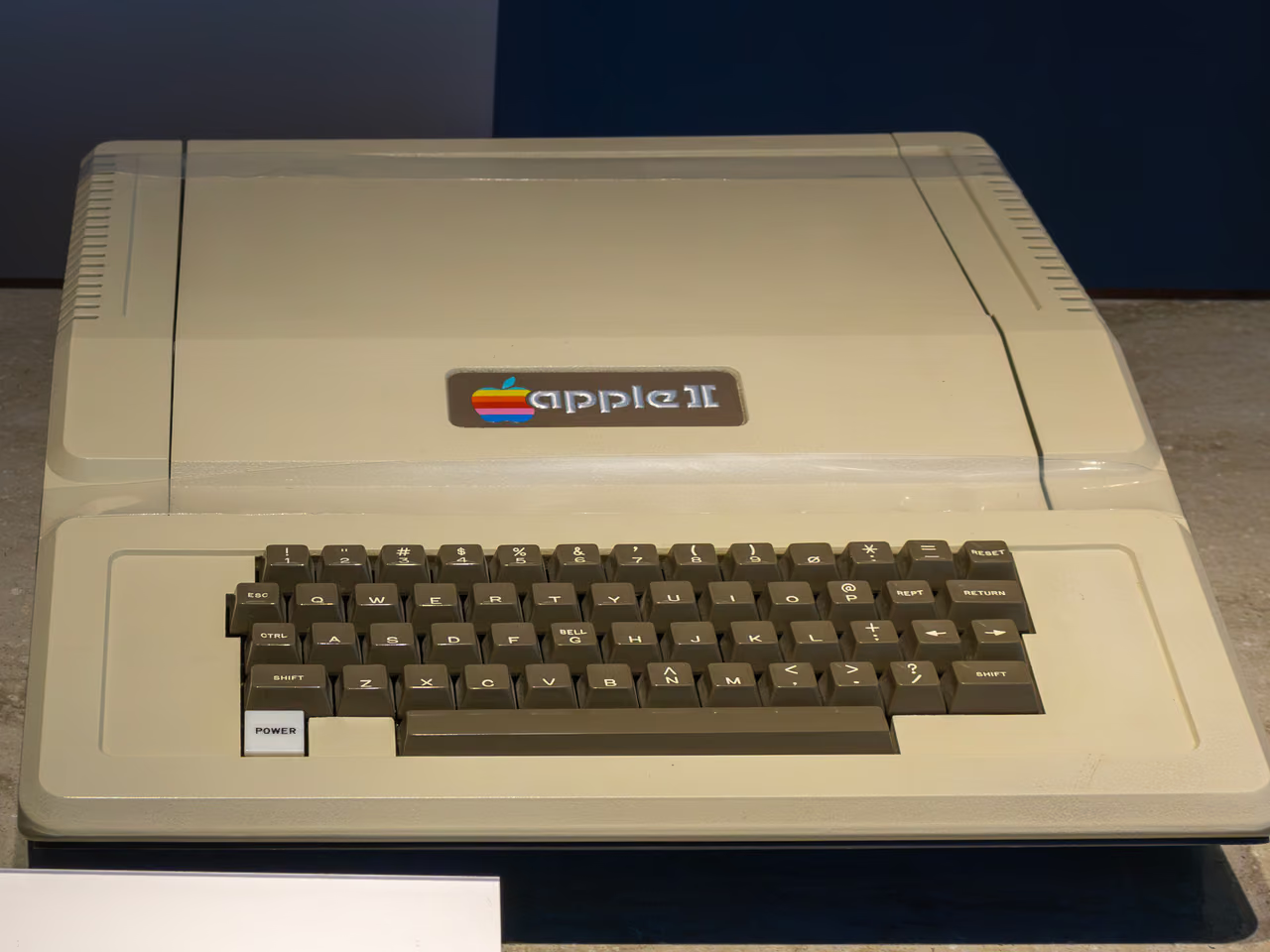
An Apple II in the Computer History Museum. The case holds the keyboard and the motherboard together; a monitor and a disk drive were bought separately.

About this machine
The January 1978 manual leaves the fitted RAM amount to the purchased configuration, so this record does not select a capacity. Its 8 KiB monitor and Integer BASIC ROM is named separately and is not writable memory.
Configuration
Configuration with unspecified RAM
| Component | Role | Count | Clock | Capacity |
|---|---|---|---|---|
| MOS Technology 6502 | Main CPU | 1 | 1.023 MHz Nominal clock | — |
| Apple II video generator | GPU | 1 | unknown Nominal clock | — |
| Apple II system RAM | System memory | 1 | — | unknown shared |
| Apple II firmware ROM Read-only monitor and Integer BASIC; not included in writable memory. | System memory | 1 | — | 8 KiB shared |
Figures for the whole machine
| Metric | Value | Evidence | Basis | Method | Source |
|---|---|---|---|---|---|
| Clock frequency cpu | 1.023 MHz | Confirmed | Vendor-rated | Nominal clock Stated by the vendor |
5 documented absences
| Metric | Value | Evidence | Basis | Method | Source |
|---|---|---|---|---|---|
| Clock frequency gpu | unknown The reference manual describes several display timing signals but does not state one frequency for a graphics processor. | Not stated | Vendor-rated | Nominal clock Stated by the vendor | |
| Memory bandwidth memory | unknown The reference manual specifies memory organization, not a transfer-rate figure. | Not stated | Vendor-rated | Theoretical peak Stated by the vendor | |
| Sustained FP40 rate whole-system | unknown The ROM format is outside FP32 and FP64; no named, reproducible benchmark run has yet been admitted. | Not stated | Measured | Benchmark run Published independently | |
| Memory capacity whole-system | unknown The January 1978 manual leaves fitted RAM dependent on the purchased configuration, so it does not support one whole-system writable-memory capacity. | Not stated | Vendor-rated | Design capacity Stated by the vendor | |
| Rated power consumption whole-system | unknown The manual gives power-supply limits and a minimum-load condition, not a comparable whole-system consumption rating. | Not stated | Vendor-rated | Rated power Stated by the vendor |
Figures for its components
1 documented absence
| Metric | Value | Evidence | Basis | Method | Source |
|---|---|---|---|---|---|
| Peak FP32 rate cpu | unknown The manual documents software floating point but does not explicitly state whether the Apple II configuration has floating-point hardware. | Not stated | Vendor-rated | Theoretical peak Stated by the vendor |
1 documented absence
| Metric | Value | Evidence | Basis | Method | Source |
|---|---|---|---|---|---|
| Memory capacity memory | unknown The January 1978 manual leaves fitted RAM dependent on the purchased configuration and does not state one universal capacity. | Not stated | Vendor-rated | Design capacity Stated by the vendor |
| Metric | Value | Evidence | Basis | Method | Source |
|---|---|---|---|---|---|
| Memory capacity memory | 8 KiB | Confirmed | Vendor-rated | Design capacity Stated by the vendor |
The program that made it a business machine
The Computer History Museum’s Revolution exhibition puts the Apple II’s commercial success down to two later additions rather than to the machine as it shipped in 1977. The floppy disk drive of 1978 and the spreadsheet program VisiCalc of 1979 are what the exhibition text says made it a blockbuster.
The museum’s timeline entry for 1979 names Dan Bricklin, then an MBA candidate at Harvard, and the programmer Bob Frankston as VisiCalc’s authors, and states that it was developed for the Apple II and boosted the machine’s sales. What the program did was recalculate a sheet of figures automatically, which the museum describes as letting someone ask “What if?” questions of their financial information.
The exhibition is careful about what the machine was sold as. It describes the Apple II as promoted for ordinary people and marketed as an everyday tool for home, work, or school, and it contrasts that with the Apple I, which left the buyer to supply a case and a power supply.