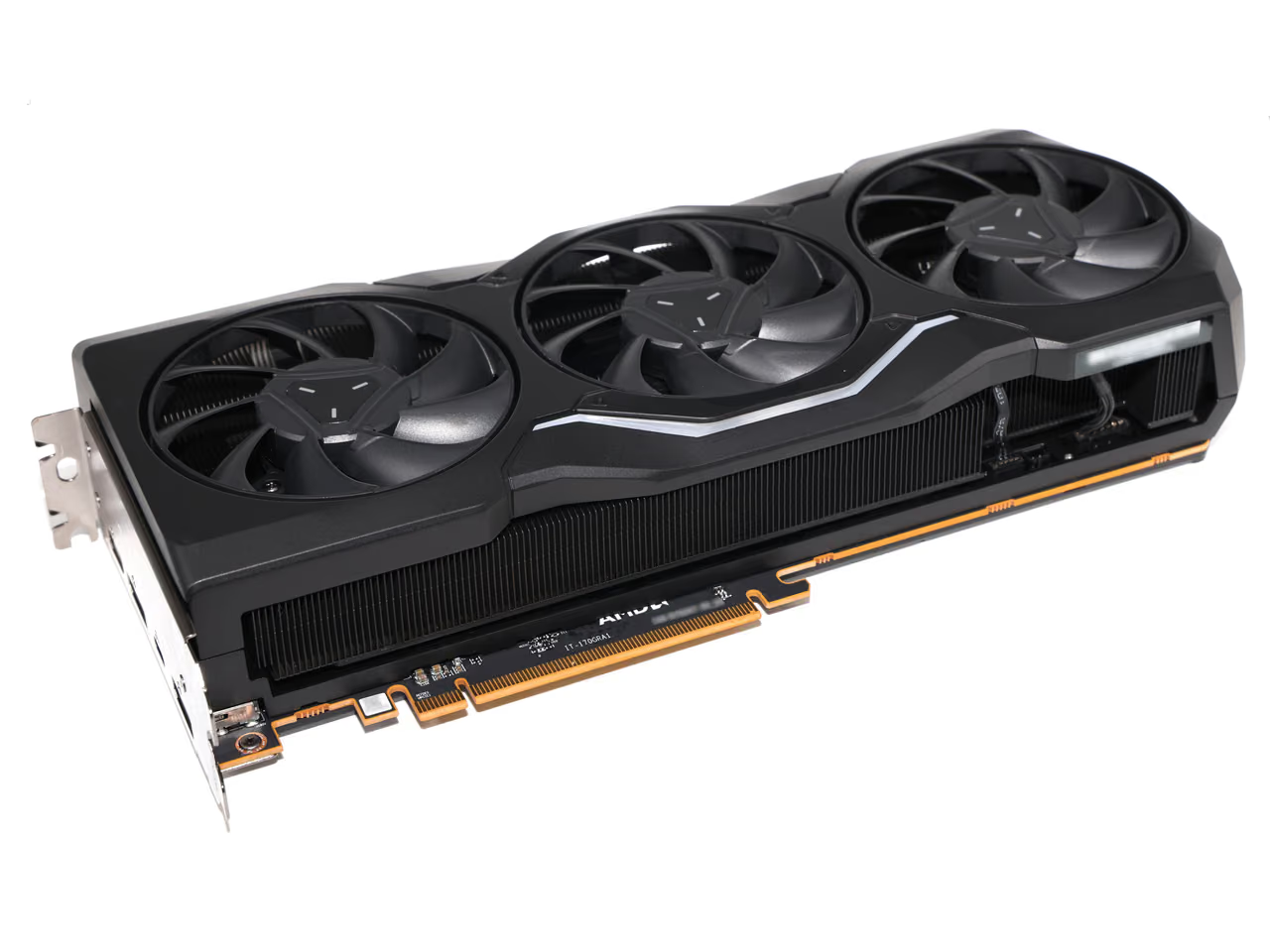
About this machine

AMD calls 2300 MHz the game clock and 2500 MHz the boost clock. The 61.42 TFLOPS peak is tied to the boost clock; it must not be recalculated from the game clock and silently relabeled as the same rate.

Configuration

Reference card

Component Role Count Clock Capacity
AMD RDNA 3 (AMD Radeon RX 7900 XTX) The lower declared clock; the separately named upper clock is recorded as a peak-clock measurement. GPU 1 2300 MHz Nominal clock 2500 MHz Peak clock
AMD Radeon RX 7900 XTX frame buffer Video memory 1 24 GiB

Figures for the whole machine

AMD Radeon RX 7900 XTX: system figures
Metric Value Evidence Basis Method Source
Memory bandwidth whole-system 960 GB/s Confirmed Derived Theoretical peak Computed here from figures the vendor stated Adds the one fitted frame-buffer bandwidth. No host memory is included.

Figures for its components

AMD RDNA 3 (AMD Radeon RX 7900 XTX)
Metric Value Evidence Basis Method Source
Clock frequency gpu 2300 MHz Confirmed Vendor-rated Nominal clock Stated by the vendor The lower declared clock. The separately named upper clock is a different quantity and uses peak-clock.
Clock frequency gpu 2500 MHz Confirmed Vendor-rated Peak clock Stated by the vendor AMD calls this the boost clock. Its separate game clock is a nominal-clock measurement.
Peak FP32 rate gpu 61.42 TFLOP/s Confirmed Theoretical Theoretical peak Stated by the vendor 12,288 stream processors × 2 FP32 operations per cycle × 2500 MHz boost clock. AMD’s 61.42 TFLOPS uses 12,288 stream processors × two FP32 operations per cycle × the 2500 MHz boost clock, never the 2300 MHz game clock.
Geekbench Compute score, opencl gpu 208 566 Confirmed Measured Benchmark chart average Published independently geekbench-compute 7 , opencl A dated capture of the benchmark publisher’s rolling average for this graphics processor, read from the 25 July 2026 OpenCL chart. Version 7 calibrates a compute result against a baseline of 100,000, so it may be compared only with another Geekbench 7 OpenCL figure from this curation round, never with a Metal figure, an earlier version or a processor score. The chart also lists this processor under “Radeon RX 7900 XTX”, at 212 610; the row naming the product as its maker does was taken, and the disagreement is recorded in the conflict ledger.
Rated power consumption gpu 355 W Confirmed Vendor-rated Rated power Stated by the vendor The vendor’s board-power rating, not a measured system draw.
AMD Radeon RX 7900 XTX frame buffer
Metric Value Evidence Basis Method Source
Memory bandwidth memory 960 GB/s Confirmed Theoretical Theoretical peak Stated by the vendor Vendor-stated maximum transfer rate of this memory interface, not a benchmarked application result.
Memory capacity whole-system 24 GiB Confirmed Vendor-rated Design capacity Stated by the vendor The frame buffer fitted to the reference accelerator; host memory is excluded.

Derived figures and comparisons

Computed by this project rather than read from a source, and recomputed from their inputs on every build.

960 000 000 000 B/s

Formula
a + b + … sum v1
Inputs
  • amd-radeon-rx-7900-xtx-memory Memory bandwidth: 960 GB/s
Rounding
none , 12 significant digits

Adds 1 memory-bandwidth figure obtained by theoretical-peak. Nothing in the catalog is left out of it. A total is only as trustworthy as the decision about what belongs in it, so both the terms and the exclusions are named records.

Editorial notes

This accelerator’s whole-system memory is its fitted frame buffer; host memory is excluded. Partner cards may differ from this reference configuration.

Sources

Back to top