Accelerator
3dfx Voodoo Graphics
The card that made 3D acceleration ordinary on a home PC, running a fixed-function pipeline of its own and leaving 2D to whatever adapter was already fitted.
- Manufacturer
- 3dfx Interactive
- Released
- November 1996
- Region
- Worldwide
- Record status
- provisional
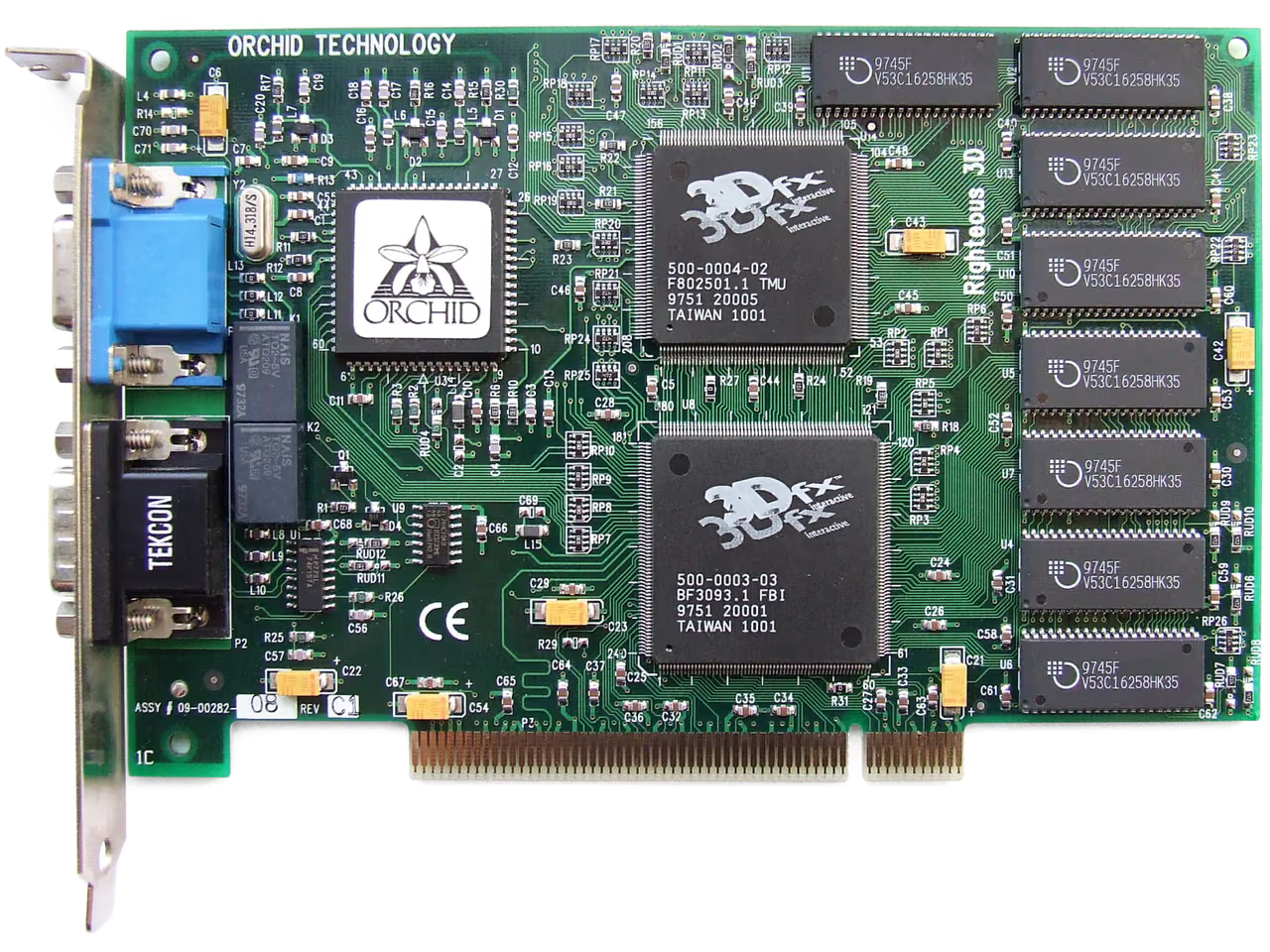
An Orchid Righteous 3D, the first retail card built on 3dfx's Voodoo Graphics chipset. It has no 2D circuitry at all: a pass-through cable carried the desktop from a separate graphics card.

About this machine
Voodoo Graphics drew only 3D. It sat beside an ordinary 2D card and took the screen over when a game started, which is why a machine fitted with one needed both boards and a short pass-through cable between them.
Configuration
Reference card
| Component | Role | Count | Clock | Capacity |
|---|---|---|---|---|
| 3dfx Interactive Voodoo (3dfx Voodoo Graphics) The dead citation does not establish a reference-card graphics clock. | GPU | 1 | 50 MHz Nominal clock | — |
| 3dfx Voodoo Graphics frame buffer | Video memory | 1 | — | 4 MB |
Figures for the whole machine
1 documented absence
| Metric | Value | Evidence | Basis | Method | Source |
|---|---|---|---|---|---|
| Memory bandwidth whole-system provisional | unknown No reviewed source establishes this figure for a Voodoo Graphics board. | Not stated | Theoretical | Theoretical peak Published independently The fitted frame-buffer bandwidth is unknown, so no whole-system value can be recorded. |
Figures for its components
provisional A figure marked provisional is recorded but not accepted: its evidence is unsettled. It may rely on one source, an unconfirmed announcement, or a digit read from a damaged scan. The reason appears under the figure. The catalog shows the figure but never uses it in a multiplier. How records are judged.
| Metric | Value | Evidence | Basis | Method | Source |
|---|---|---|---|---|---|
| Clock frequency gpu provisional | 50 MHz | Confirmed | Vendor-rated | Nominal clock Published independently Two independent technical histories agree on this graphics-clock figure. |
4 documented absences
| Metric | Value | Evidence | Basis | Method | Source |
|---|---|---|---|---|---|
| Peak FP32 rate gpu provisional | unknown No reviewed source establishes this figure for a Voodoo Graphics board; fill rate is not treated as FLOPS. | Not stated | Vendor-rated | Theoretical peak Published independently No qualifying document-level replacement establishes an FP32 rate for this fixed-function card. | |
| Pixel fill rate gpu provisional | unknown No reviewed source establishes this figure for a Voodoo Graphics board. | Not stated | Theoretical | Theoretical peak Published independently No qualifying document-level replacement establishes a pixel fill rate. | |
| Texel fill rate gpu provisional | unknown No reviewed source establishes this figure for a Voodoo Graphics board. | Not stated | Theoretical | Theoretical peak Published independently No qualifying document-level replacement establishes a texel fill rate. | |
| Rated power consumption gpu provisional | unknown No reviewed source establishes this figure for a Voodoo Graphics board. | Not stated | Vendor-rated | Rated power Published independently No qualifying document-level replacement establishes a board-power rating. |
provisional A figure marked provisional is recorded but not accepted: its evidence is unsettled. It may rely on one source, an unconfirmed announcement, or a digit read from a damaged scan. The reason appears under the figure. The catalog shows the figure but never uses it in a multiplier. How records are judged.
| Metric | Value | Evidence | Basis | Method | Source |
|---|---|---|---|---|---|
| Memory capacity whole-system provisional | 4 MB | Rumored | Vendor-rated | Design capacity From community documentation No 3dfx document in this catalog states the card's memory. Wikipedia gives 4 MB of EDO DRAM for the board as it shipped, and the catalog carries it as rumored. |
1 documented absence
| Metric | Value | Evidence | Basis | Method | Source |
|---|---|---|---|---|---|
| Memory bandwidth memory provisional | unknown No reviewed source establishes this figure for a Voodoo Graphics board. | Not stated | Theoretical | Theoretical peak Published independently No qualifying document-level replacement establishes the memory interface or bandwidth. |
Editorial notes
The dead citation does not establish the fitted frame buffer or other reference-card details.
Three people who left Silicon Graphics
The Computer History Museum’s timeline entry for 1996 records who started 3dfx: three former Silicon Graphics employees, setting up to design chipsets for other companies’ graphics cards rather than to build cards themselves.
The museum’s account of the company’s early success points at arcades rather than at home machines, naming San Francisco Rush and Wayne Gretzky’s 3D Ice Hockey among the cabinets built on the Voodoo system.
The same entry contains the end of the story, and it involves two machines that also appear in this catalog. A partnership to supply graphics hardware for Sega’s Dreamcast was attempted and failed; better competing 3D cards arrived; and the company eventually sold all of its intellectual property to Nvidia.